Introduction
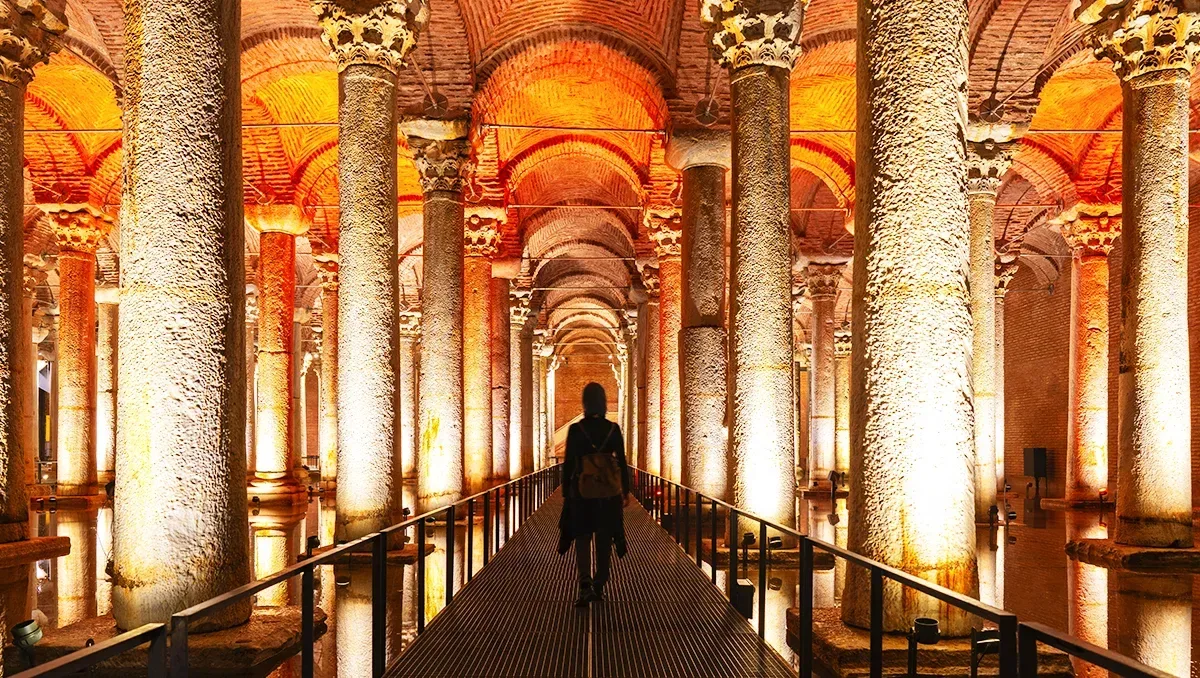
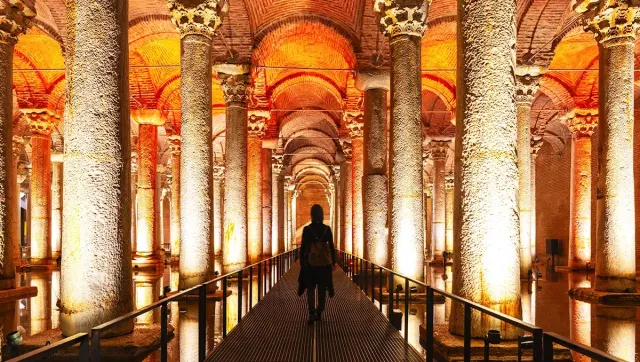
You walk down a short flight of stairs from one of the busiest squares in Istanbul. Within seconds, the noise of traffic and crowds disappears. The air becomes cool and still. In front of you, hundreds of marble columns rise out of dark water, glowing in soft light and stretching into the distance.
This is the Basilica Cistern, known in Turkish as Yerebatan Sarnici, the Sunken Palace. It is one of the most atmospheric places in the city, and one of the few that can surprise even experienced travellers.
This guide explains why the cistern was built, what to look for as you walk through it, the legends that surround its most famous columns and how to fit it into your day in Sultanahmet.
01 / 13 · 1 min read
Why a City Needed an Underground Palace
In the 6th century, Constantinople was one of the largest and richest cities in the world. Its palaces, baths and fountains needed a constant supply of fresh water, but the city had very few natural sources of its own.
The solution was a vast system of aqueducts and cisterns. Water was carried from forests far outside the city and stored in huge underground reservoirs, ready to be used in times of drought or siege.
The Basilica Cistern was built during the reign of Emperor Justinian, the same emperor who rebuilt Hagia Sophia. It took its name from a large public building, the Stoa Basilica, that once stood above it. The cistern supplied water to the Great Palace of the emperors and the surrounding area.
A Feat of Engineering
The cistern is enormous. Its roof is supported by hundreds of columns, arranged in long, regular rows. Its walls were built thick and coated with special mortar to make them waterproof. It could hold a remarkable volume of water, enough to support the palace for long periods.
Standing inside, it is easy to forget that this was a practical piece of infrastructure. The Byzantines turned a water tank into a space that feels almost sacred.
02 / 13 · 1 min read
A Forgotten Wonder Rediscovered
After the Ottoman conquest, the cistern was not used in the same way, and over time much of the city forgot it existed. Some stories say that people living above it lowered buckets through holes in their floors to draw water, and even caught fish, without knowing what lay beneath them.
In the 16th century, a European scholar visiting the city heard these stories, searched for the source of the water and rediscovered the cistern. His writings helped bring it back to the attention of the world.
Since then, the cistern has been restored several times. Today it is one of the most visited sites in Istanbul.
03 / 13 · 1 min read
The Forest of Columns
The first thing that strikes you is the columns. They stand in long, perfectly spaced rows, rising from the water to support brick arches above.
Look closely, and you will notice that they are not all the same. Many were taken from older buildings and reused here, which is why you will see different shapes, materials and styles of capitals. Some are smooth, some are fluted, some have elaborate carvings.
This mix of styles is part of what makes the cistern so fascinating. Each column has its own past, often older than the cistern itself.
TripSpoiler tip: Most visitors walk straight to the far end. Stop halfway, turn around and look back down the rows of columns. With the reflections in the water, it is often the most beautiful view in the cistern.
04 / 13 · 1 min read
The Mystery of the Medusa Heads
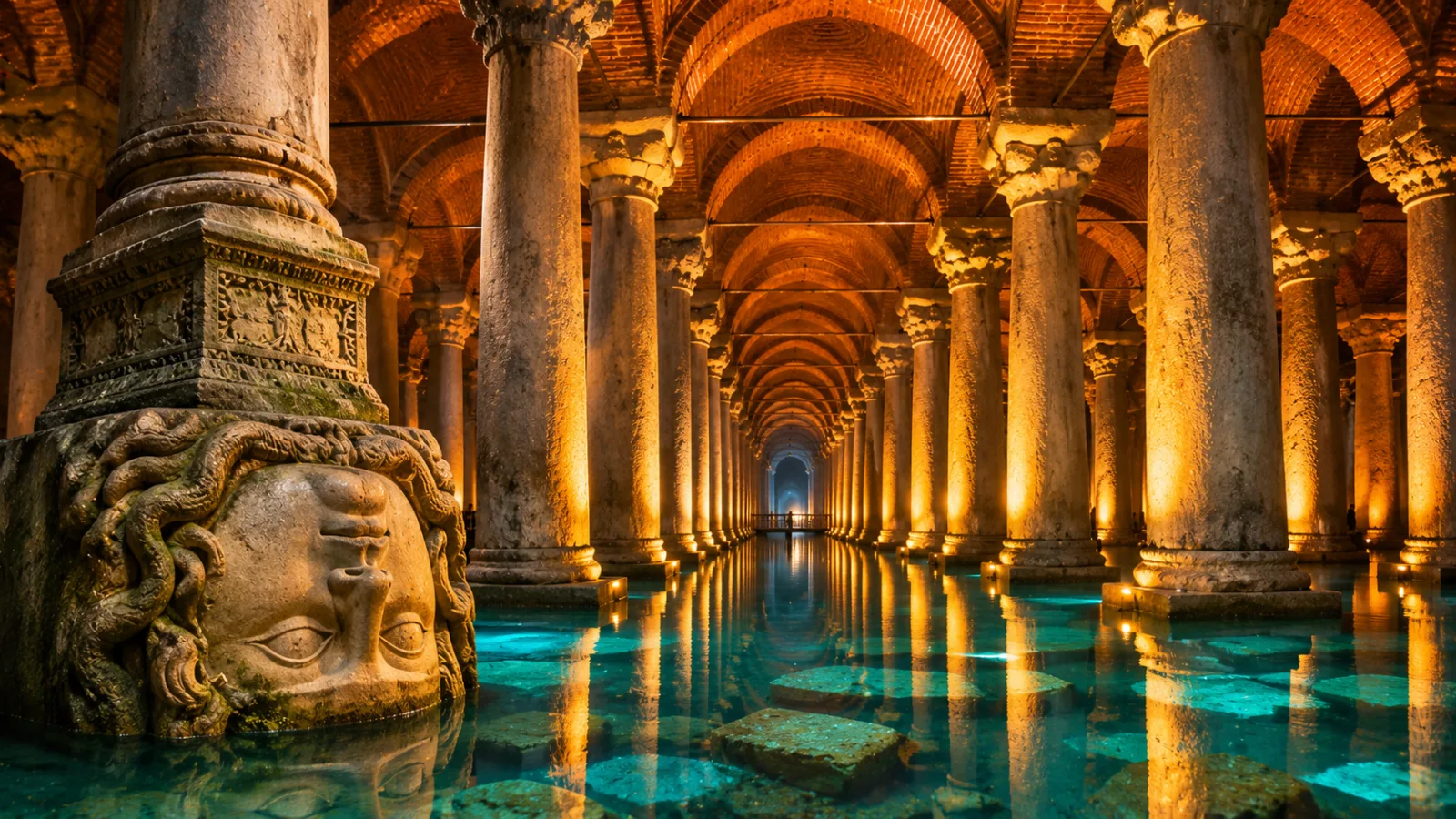
At the far end of the cistern, two columns stand on carved stone blocks shaped as the head of Medusa, the mythological figure whose gaze turned people to stone.
One head is placed sideways. The other is upside down.
No one knows for certain why. There are several theories:
- A practical reason: the blocks may simply have been placed this way to reach the right height for the columns.
- A protective reason: some believe they were turned to cancel Medusa's power, so her gaze could not harm anyone.
- A symbolic reason: others think it was a way of showing that pagan symbols no longer had power in a Christian city.
The truth may never be known, and that mystery is part of their appeal. The Medusa heads are one of the most photographed spots in Istanbul.
05 / 13 · 1 min read
The Weeping Column and Other Legends
Not far from the entrance, look for a column covered in carved patterns that look like eyes or tears. It is often damp, and many visitors call it the Weeping Column.
Local legends say it honours the many workers who lost their lives during construction. Another tradition says that if you put your thumb in the hole on the column and turn your hand in a full circle, your wish will come true.
Whether you believe the stories or not, it is a lovely place to pause.
The Fish of the Cistern
Look into the water and you may spot fish moving slowly between the columns. They have become part of the cistern's character, and children especially love looking for them.
06 / 13 · 1 min read
The Cistern in Films and Books
The Basilica Cistern has captured the imagination of writers and filmmakers. It appeared in a classic spy film of the 1960s and in more recent books and movies, often as a mysterious, hidden setting.
These appearances have helped make it one of the most recognisable underground spaces in the world.
07 / 13 · 1 min read
The Cistern Today
After careful restoration, the cistern today combines its historic atmosphere with modern lighting that highlights the columns and reflections. Raised walkways let you move through the space easily, and occasional art installations add a contemporary touch.
The air is cool year-round, which makes it a welcome break on a hot summer day.
08 / 13 · 1 min read
How to Plan Your Visit
How Much Time Do You Need?
Most visits take less than an hour. If you enjoy photography or simply want to soak up the atmosphere, give yourself a little more time.
When to Go
Queues can be long in busy seasons, especially in the middle of the day. Arriving early or booking in advance helps you plan your day. Opening hours can change, so always check the activity page before you go.
What to Wear
The walkways can be damp in places, so wear comfortable shoes with good grip. It can feel noticeably cooler inside than outside, so a light layer is useful.
Photography
Photography is generally allowed, but the light is low. Hold your phone steady, use the reflections and avoid using a flash on other visitors.
Accessibility
The cistern is reached by stairs. If you have mobility concerns, check the details before your visit.
09 / 13 · 1 min read
Combine It With Sultanahmet
The Basilica Cistern is in the heart of the historic peninsula, a short walk from:
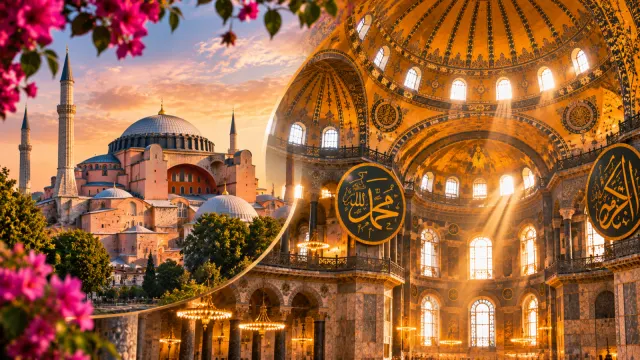
- Hagia Sophia, just across the square.
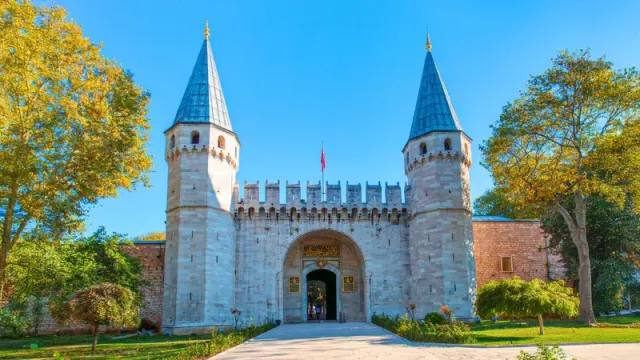
- Topkapi Palace, a few minutes away.
- The Blue Mosque area and the Hippodrome.
- The Grand Bazaar, a short walk or tram ride away.
Many travellers use the cistern as a cool break between longer visits.
11 / 13 · 1 min read
The Atmosphere: Light, Sound and Silence
What makes the cistern so special is not only what you see, but how it feels. The temperature drops as soon as you step inside. The sounds of the city vanish, replaced by the soft drip of water and quiet footsteps on the walkways.
The lighting changes the mood from one section to another. Some columns glow warm and golden, others fade into darkness. The reflections in the water double everything, so the space looks even larger than it is.
TripSpoiler tip: Find a quiet spot along the walkway and stand still for a minute. Without the movement, you will notice details in the columns and the ceiling that most visitors miss.
12 / 13 · 1 min read
A Short Walk Through Byzantine Sultanahmet
When you come back up to the street, you are standing in the heart of what was once the Byzantine capital. A short walk shows you how much of that city survives:
- The Hippodrome, once the scene of chariot races, where you can still see the ancient obelisks and the bronze Serpent Column.
- Hagia Sophia, the greatest church of the Byzantine world, just across the square.
- The Great Palace Mosaic Museum, where floor mosaics from the emperors' palace are displayed.
Combining these sites with the cistern gives you a clear picture of Byzantine Constantinople in just a few hours.
13 / 13 · 1 min read
Why the Basilica Cistern Is a Must-See
The Basilica Cistern shows a different side of Istanbul: a practical piece of engineering that became one of the most beautiful spaces in the city. It is quiet, mysterious and completely unique.
Even if you only have one day in Istanbul, it deserves a place in your plan. Walk slowly, look back often and let the silence of the Sunken Palace stay with you.