Istanbul · Places to visit
Basilica Cistern
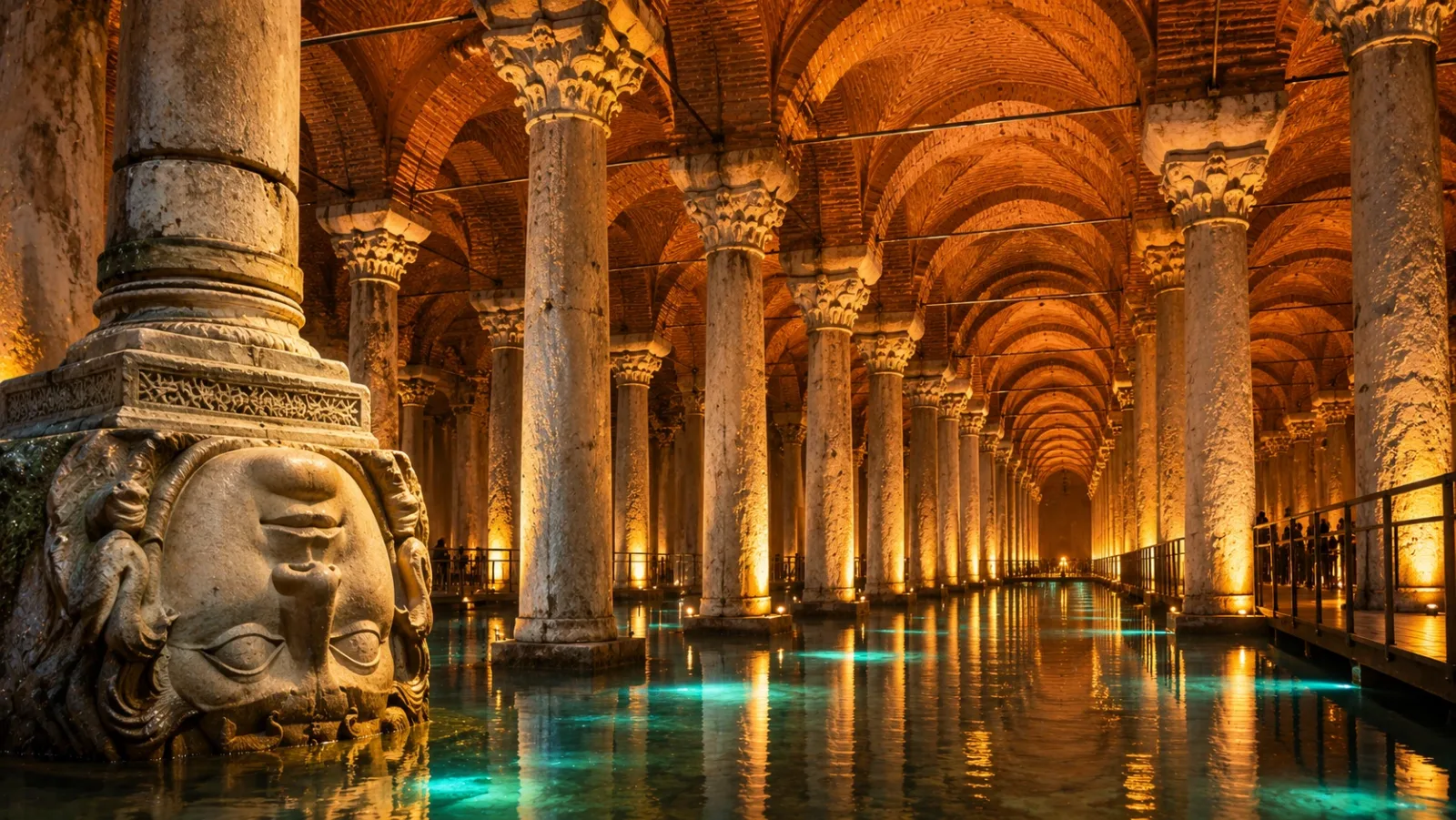
A 6th-century underground reservoir with a forest of lit marble columns and the famous Medusa heads, just across the road from Hagia Sophia.
Visiting Basilica Cistern
| Opening hours | Daily, generally 09:00–19:00 for daytime visits |
|---|---|
| Closed | Open every day; hours can change for special events |
| Getting there | T1 tram to Sultanahmet; the entrance is a 1-minute walk from Hagia Sophia |
| Dress code | No dress code |
| Official website | yerebatan.com ↗ |
Hours can change for holidays and events. Check the official website before you go.
Basilica Cistern tours & activities
Activities, passes and combos that include this place. You book on the partner's site.
-
 City pass
Istanbul Imperial Heritage Pass
Flexible schedule Included
-
 City pass
Istanbul Signature Experience Pass
Flexible, multiple experiences Included
-
 City pass
Istanbul 7-Day Culture Pass: Basilica Cistern, Panorama 1453, Miniaturk & Bosphorus Cruise
7 days from first use Included
-
 Package
Sultanahmet Big Three Combo: Hagia Sophia, Topkapi Palace & Basilica Cistern
Valid for 3 days Included
-
 Package
Hagia Sophia, Basilica Cistern & Blue Mosque Self-Guided Combo with Audio Guides
Valid for 48 hours Included
-
 Package
Hagia Sophia & Basilica Cistern Combo Tickets with Audio Guides
Valid for 3 days Included
-
 Package
Sultanahmet Guided Walk: Blue Mosque, Hagia Sophia & Basilica Cistern in 4 Hours
4 hours
-
 Experience
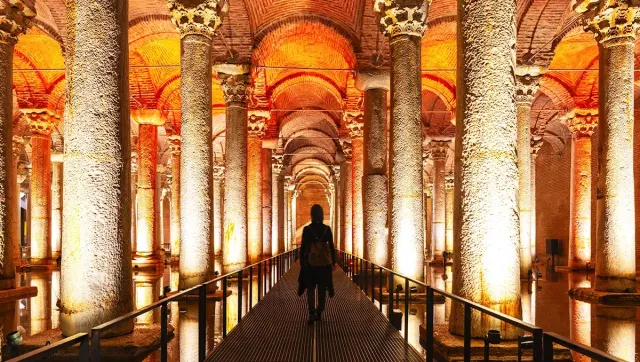
Basilica Cistern: The Hidden World Beneath Istanbul
30 minutes guided tour Included
About Basilica Cistern
Why visit the Basilica Cistern
Just a few steps below the busy streets of Sultanahmet lies one of Istanbul's most atmospheric places. The Basilica Cistern is a vast underground reservoir built in the 6th century, during the reign of Emperor Justinian, to store water for the Great Palace and the city. Walking along its raised paths, surrounded by rows of columns reflected in the water, feels like entering a hidden world.
Soft lighting, the sound of dripping water and the cool air make it a favourite stop on hot summer days and a great contrast to the grand monuments above ground.
A short history
The cistern took its name from a large public square, the Stoa Basilica, that once stood above it. Water was brought from forests outside the city through aqueducts and stored here. Over time the cistern was almost forgotten, until travellers rediscovered it in the 16th century. It has been restored several times, most recently in a major project that reopened it with new walkways and lighting.
What you will see
- The forest of columns: hundreds of marble columns, many reused from older buildings, standing in neat rows in the dim light.
- The Medusa heads: two carved heads of Medusa used as column bases, one placed sideways and one upside down. Nobody knows for sure why.
- The Column of Tears: a column carved with teardrop and eye patterns, which always seems wet.
- Light and art: changing lighting and, at times, contemporary art installations add to the atmosphere.
How long to spend
Most visitors spend around 30 to 45 minutes underground. With a guide you will learn more about the engineering and the legends, and you can stay longer afterwards to take photos.
Best time to visit
The cistern is busiest in the late morning when tour groups arrive. Early in the day or late in the afternoon is calmer. It is also a perfect midday plan in summer, when the streets above are hot.
Tips for your visit
- The paths can be damp, so wear shoes with good grip.
- It is dark inside: switch your camera or phone to a low-light mode and avoid flash.
- Expect a security check at the entrance, even with a ticket.
- Bring a light layer: the air underground stays cool all year.
Nearby
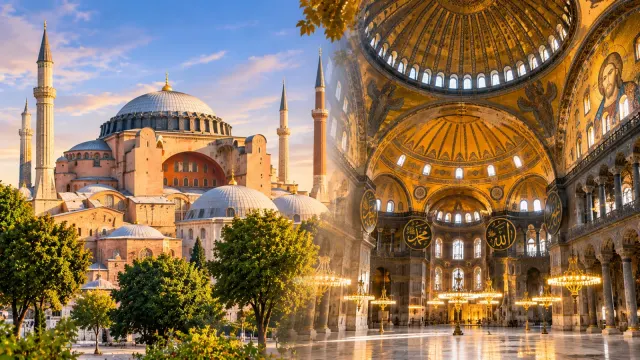
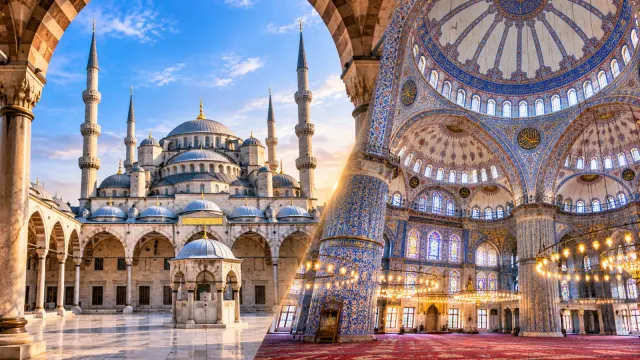
The entrance is opposite Hagia Sophia, and the Blue Mosque and Topkapi Palace are a short walk away. It fits easily between two bigger visits in Sultanahmet.
FAQ
Questions, answered.
Quick answers to what travelers ask us most.
 Still have a question?
Write to us; we usually reply within a day.
-
Most visits take 30 to 60 minutes, so it is easy to combine with Hagia Sophia on the same day.
-
At the far end of the cistern, used as the bases of two columns. One is upside down and one lies on its side.
-
Yes. Several combo tickets on this page include both the Basilica Cistern and Hagia Sophia, and some passes add Topkapi Palace too.
-
It was built in the 6th century under the Byzantine Emperor Justinian to store water for the Great Palace and the city.
-
The cistern has 336 marble columns arranged in rows, many of them reused from older buildings.
-
Take the T1 tram to Sultanahmet. The entrance is a short walk away, across the road from Hagia Sophia.
-
It is cooler than outside in summer and can feel damp. The walkways can be slippery, so wear comfortable shoes with good grip.
-
Yes. The rows of lit columns, the Medusa heads and the cool, atmospheric space make it one of the most memorable sights on the Historic Peninsula, and a visit takes under an hour.