Istanbul · Places to visit
Blue Mosque (Sultan Ahmed Mosque)
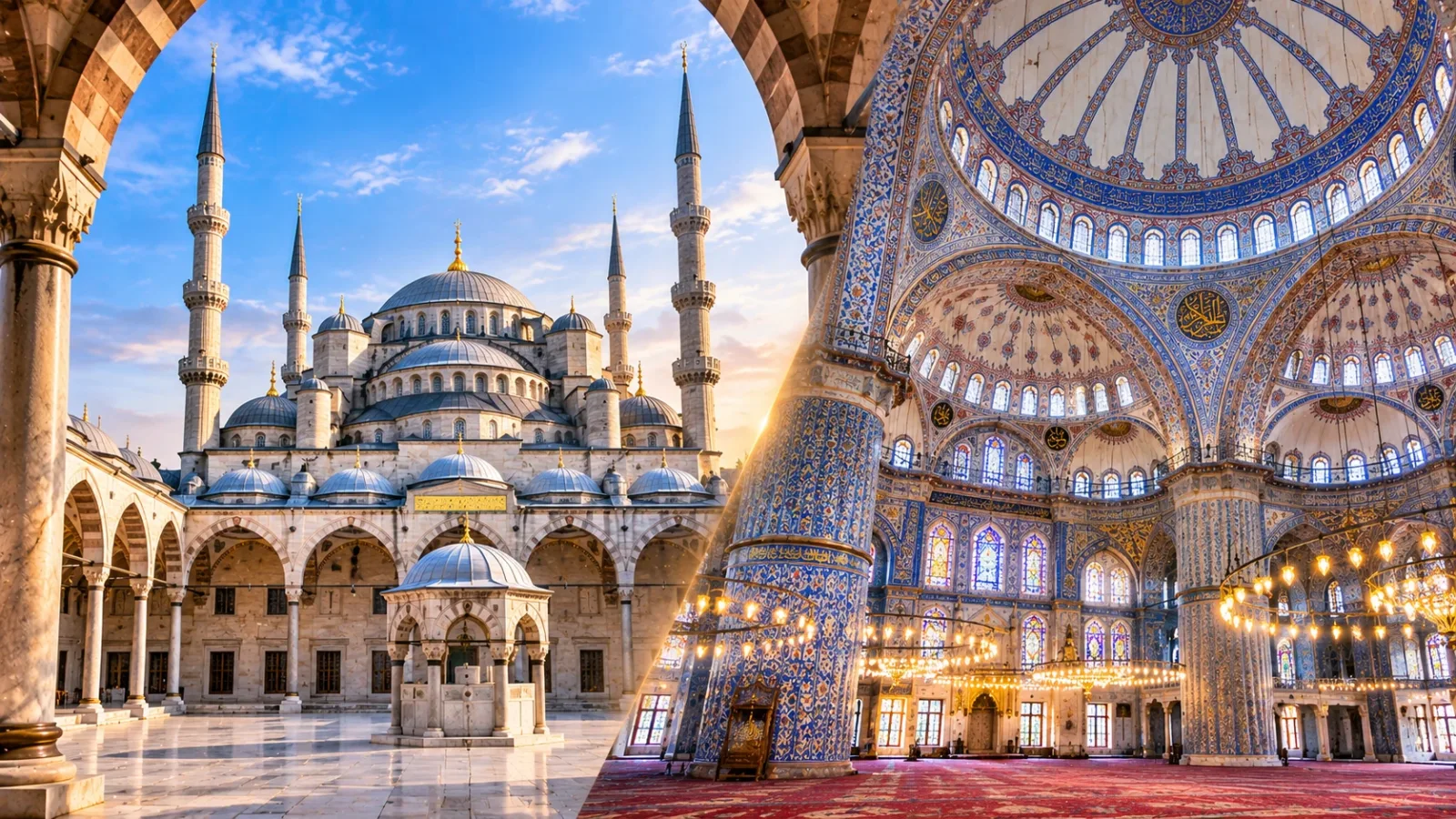
The 17th-century Sultan Ahmed Mosque, known for its six minarets and the blue Iznik tiles inside. Entry is free outside prayer times.
Visiting Blue Mosque (Sultan Ahmed Mosque)
| Opening hours | Open to visitors daily outside the five prayer times |
|---|---|
| Closed | Closed to visitors during prayers, with longer closures on Friday around midday |
| Getting there | T1 tram to Sultanahmet, then a 3-minute walk |
| Dress code | Shoulders and knees covered; women cover their hair; shoes are taken off inside |
Hours can change for holidays and events. Check the official website before you go.
Blue Mosque (Sultan Ahmed Mosque) tours & activities
Activities, passes and combos that include this place. You book on the partner's site.
-
 City pass
Istanbul Imperial Heritage Pass
Flexible schedule Included
-
 City pass
Istanbul Signature Experience Pass
Flexible, multiple experiences Included
-
 Package
Hagia Sophia, Basilica Cistern & Blue Mosque Self-Guided Combo with Audio Guides
Valid for 48 hours Included
-
 Package
Sultanahmet Guided Walk: Blue Mosque, Hagia Sophia & Basilica Cistern in 4 Hours
4 hours
About Blue Mosque (Sultan Ahmed Mosque)
Why visit the Blue Mosque
The Sultan Ahmed Mosque, known around the world as the Blue Mosque, is one of the most beautiful mosques in Istanbul and a symbol of the city's skyline. Built in the early 17th century for Sultan Ahmed I, it is famous for its cascade of domes, its six minarets and the thousands of hand-painted İznik tiles that give the interior its blue glow.
It is still a working mosque, so visiting means sharing the space with people who come to pray. That is part of what makes it special: you see a historic monument that is very much alive.
A short history
Sultan Ahmed I commissioned the mosque, and it was built between 1609 and 1616 by the architect Sedefkâr Mehmed Ağa, a student of the great Mimar Sinan. It was designed as a grand complex, with a school, a hospital, a market and the sultan's tomb around it. The mosque was carefully restored in recent years and reopened with its tiles and painted decoration refreshed.
What you will see
- The domes: a central dome supported by four huge columns, with smaller domes and half-domes stepping down around it.
- The İznik tiles: floral patterns of tulips, carnations and cypress trees covering the walls, mostly in shades of blue and green.
- The stained glass: more than two hundred windows let in coloured light across the carpets.
- The courtyard: a large arcaded courtyard with a central fountain, as big as the prayer hall itself.
- The six minarets: unusual for its time, they make the mosque easy to recognise from across the city.
How long to spend
Allow about 30 to 45 minutes, plus waiting time at the entrance in busy seasons. A guide can explain the meaning of the decoration and the role of the mosque in Ottoman life.
Best time to visit
Entry is free, but the mosque closes to visitors during the five daily prayers and for longer on Friday around midday. Go early in the morning or between prayer times, and check the times on the day of your visit.
Tips for your visit
- Dress modestly: cover shoulders and knees, and women cover their hair. Covers are usually provided at the entrance.
- Shoes are removed before entering; bags are provided to carry them.
- Keep your voice low and avoid walking in front of people who are praying.
- The square outside is lovely at dusk, when the mosque is lit up.
Nearby
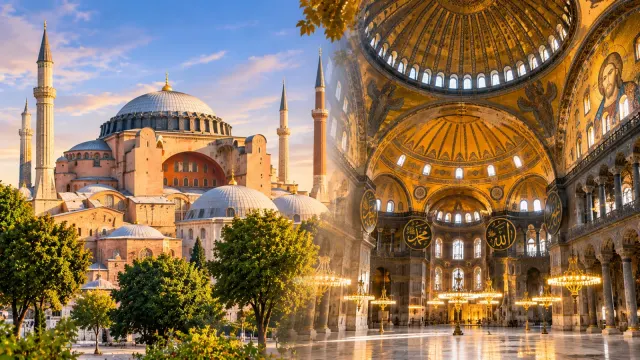
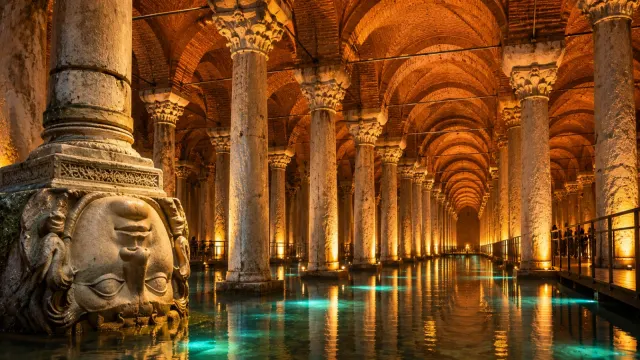
The mosque faces Hagia Sophia across Sultanahmet Square. Next to it is the Hippodrome, the old Byzantine racetrack with its Egyptian obelisk, and the Basilica Cistern is a short walk away.
FAQ
Questions, answered.
Quick answers to what travelers ask us most.
 Still have a question?
Write to us; we usually reply within a day.
-
Yes, entry is free. Guided tours and audio guides are optional and help you understand the history and architecture.
-
Outside the five daily prayer times. Visits pause during prayers, and on Fridays the break around midday is longer.
-
Yes. Cover shoulders and knees, women cover their hair, and everyone takes off their shoes before entering.
-
Its official name is the Sultan Ahmed Mosque. It is called the Blue Mosque because of the thousands of blue-toned İznik tiles that decorate its interior.
-
It was built between 1609 and 1616 for Sultan Ahmed I, opposite Hagia Sophia on what was once the Byzantine Hippodrome.
-
Six, which made it stand out among Istanbul's imperial mosques when it was built.
-
Yes. Shoes come off before entering the carpeted prayer hall; carry them with you in a bag, which is usually provided at the entrance.
-
Yes, but it closes to visitors for longer around Friday midday prayer. Plan your visit for the morning or later in the afternoon.