Introduction
If Topkapi Palace shows you the classic world of the Ottoman sultans, Dolmabahce Palace shows you an empire in transformation. Stretched along the European shore of the Bosphorus, it combines European architecture with Ottoman traditions and is one of the most lavishly decorated buildings in Istanbul.
Inside, crystal chandeliers hang from gilded ceilings, marble staircases sweep upwards and enormous halls open onto the water. It is a palace designed to impress, but also a place full of meaning, where some of the most important moments of modern Turkish history took place.
This guide covers the story of the palace, what to look for in each section and how to plan a visit that goes beyond the obvious highlights.
01 / 15 · 1 min read
A New Palace for a Changing Empire
By the 19th century, the Ottoman Empire was going through a period of major reform. The government was being reorganised, new schools and institutions were opening and the empire was looking closely at the modern states of Europe.
Topkapi Palace, with its centuries-old layout of courtyards and pavilions, no longer matched this new image. Sultan Abdulmecid I wanted a residence that showed the empire as modern, powerful and connected to the wider world.
Dolmabahce Palace was built between 1843 and 1856. When it was completed, the court moved here from Topkapi, and the palace became the centre of government and the symbol of a new era.
What Does Dolmabahce Mean?
The name comes from the site itself. The area was once a small bay on the Bosphorus that was gradually filled in to create land. Dolma means filled and bahce means garden, so Dolmabahce means the filled garden. Before the palace was built, the land was used as a royal garden and pavilion area.
02 / 15 · 1 min read
European Style With an Ottoman Soul
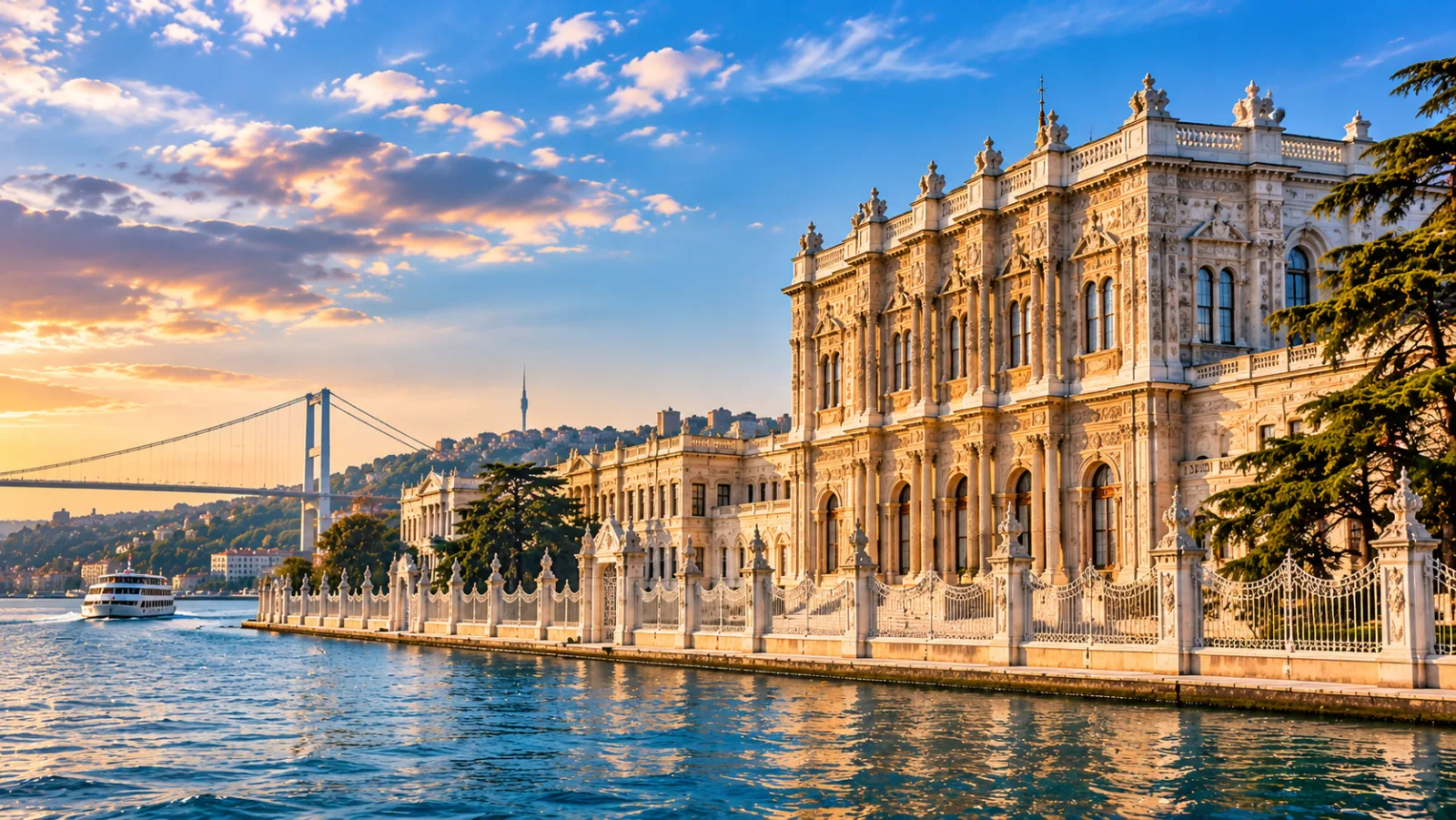
The first thing you notice at Dolmabahce is its style. The facade facing the Bosphorus is long, symmetrical and richly decorated, very different from the low pavilions of Topkapi.
Inside, the architects combined European styles such as Baroque, Rococo and Neoclassical with traditional Ottoman room layouts. The result is a palace that feels like a meeting point between two worlds.
Crystal, marble, gold leaf, silk carpets and painted ceilings appear in almost every room. Even visitors who are not interested in architecture are often amazed by the scale and detail.
03 / 15 · 1 min read
The Palace Layout
Dolmabahce is divided into two main sections, following Ottoman tradition.
The Selamlik
The Selamlik was the public and official part of the palace. This is where the sultan carried out state business, received officials and welcomed foreign guests. Its rooms are designed to impress visitors with the wealth and power of the empire.
The Harem
The Harem was the private part of the palace, where the sultan and his family lived. Its rooms are more personal, with living spaces, bedrooms and areas used by the sultan's mother and other family members.
Between the two lies the most spectacular room of all, the Ceremonial Hall.
04 / 15 · 1 min read
The Highlights of the Selamlik
The Crystal Staircase
One of the most famous features of the palace, the Crystal Staircase is a double staircase with banisters made of crystal. Light reflects from every surface, and it is one of the moments when visitors instinctively slow down and look around.
The Reception Rooms
The Selamlik contains a series of elegant rooms where officials and guests waited and were received. Each one has its own colours, ceilings and furniture. Look at the details: the inlaid floors, the painted ceilings and the clocks, many of which are works of art in themselves.
The Hall of the Ambassadors
This grand hall was used to receive foreign diplomats. Its decoration was carefully designed to show the empire's power and taste.
05 / 15 · 1 min read
The Ceremonial Hall
The Ceremonial Hall is the heart of Dolmabahce and one of the most breathtaking rooms in Istanbul. It is huge, with a high dome and tall columns, and was used for the most important state ceremonies and celebrations.
From the centre of the dome hangs an enormous crystal chandelier, one of the largest of its kind. Standing beneath it, it is easy to understand why visitors from around the world were impressed by the Ottoman court.
TripSpoiler tip: When you enter the Ceremonial Hall, walk slowly to the centre before looking up. The full effect of the dome and the chandelier is much stronger when you see it all at once.
06 / 15 · 1 min read
The Harem
The Harem section feels quieter and more personal. Here you can see the rooms where the sultan's family lived, rested and spent their daily lives.
Look out for the apartments of the sultan's mother, the family living rooms and the views over the Bosphorus from the windows. The furniture and personal objects give a sense of what life was like inside the palace in its final decades.
07 / 15 · 1 min read
A Place in Modern Turkish History
Dolmabahce is not only an Ottoman palace. It is also an important place in the history of the Turkish Republic.
Mustafa Kemal Ataturk, the founder of modern Turkey, used the palace during his visits to Istanbul. He spent his final days here and passed away in the palace on 10 November 1938, at 9:05 in the morning. Many clocks in the palace were stopped at that time in his memory.
The room where he died is kept simple and is a place of respect for many Turkish visitors. If you visit, you will often see people standing quietly in front of it.
08 / 15 · 1 min read
The Gardens and the Waterfront
Outside the palace, the gardens stretch along the Bosphorus. They are beautifully kept, with fountains, flowerbeds and sculptures, and they offer lovely views of the water and the Asian shore.
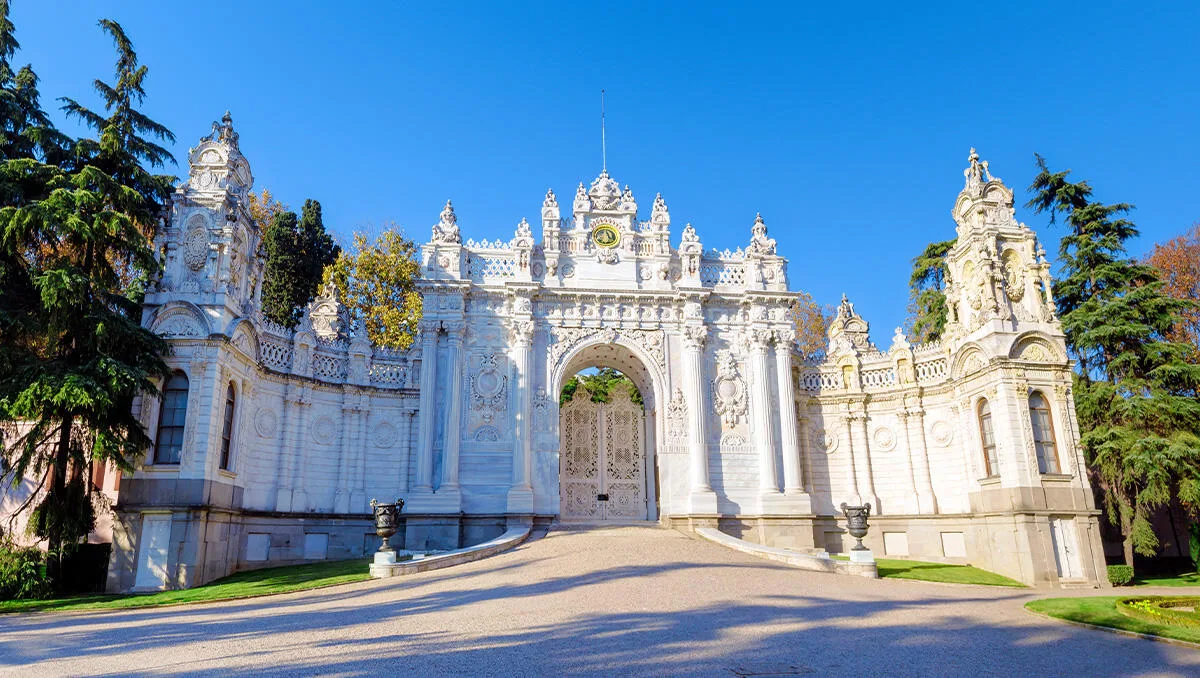
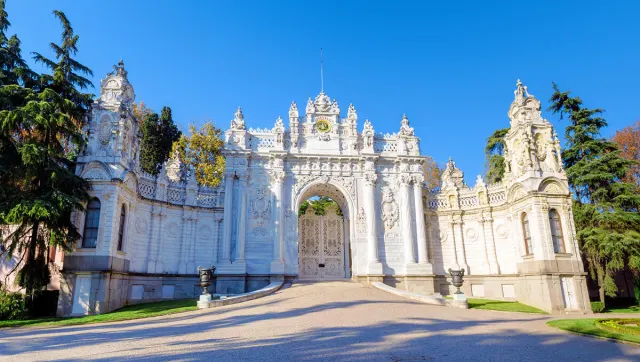
Do not miss the monumental gates of the palace, especially the ornate Imperial Gate and the Treasury Gate. Their decoration is as rich as anything inside.
TripSpoiler tip: After your visit, see the palace from the water. A Bosphorus cruise lets you appreciate the full length of the facade, which is hard to see from the land.
09 / 15 · 1 min read
How to Plan Your Visit
How Much Time Do You Need?
Plan at least two to three hours to see the Selamlik, the Ceremonial Hall and the Harem without rushing. Add extra time for the gardens.
How Visits Work
Visits inside the palace follow set routes, and the rules can change. Some tickets include guided visits or audio guides. Check what is included on the activity page before you book.
Photography
Photography rules can vary by area. Follow the signs and staff instructions during your visit.
When to Go
Opening days and hours can change, so always check the activity page before you go. Arriving early helps you avoid the busiest times.
Getting There
The palace is in the Besiktas district, on the European shore of the Bosphorus. It is easy to reach from Taksim, Kabatas and the waterfront.
10 / 15 · 1 min read
Topkapi or Dolmabahce?
Many travellers ask which palace to visit if they only have time for one. The answer depends on what interests you:
- Choose Topkapi if you want to see the classic Ottoman palace, its courtyards, the Harem and the Treasury.
- Choose Dolmabahce if you are interested in the 19th century, European influences and modern Turkish history.
If you have time for both, visit Topkapi first and Dolmabahce second. Seeing them in this order shows you how dramatically the empire changed over four centuries.
11 / 15 · 1 min read
Combine Dolmabahce With Besiktas and the Bosphorus
After your visit, there is plenty to do nearby:
- Walk along the Bosphorus towards Ortakoy and its famous mosque.
- Take a Bosphorus cruise from the nearby piers.
- Explore Besiktas, a lively neighbourhood with markets and cafes.
- Visit the naval museum nearby if you are interested in maritime history.
12 / 15 · 1 min read
The Last Chapter of the Ottoman Court
Dolmabahce was home to the final generations of the Ottoman dynasty. Several sultans lived here, and the palace witnessed the great changes of the empire's last decades: reforms, new constitutions, wars and, finally, the end of the empire itself.
Walking through its halls, you are seeing the setting of these final chapters. Many of the rooms are kept much as they were, with furniture, carpets and objects from the period. It feels less like a museum and more like a home that was left one day and never changed.
13 / 15 · 1 min read
The Clock Tower and the Mosque
Do not leave the area without looking at two buildings just outside the palace walls.
Dolmabahce Clock Tower
Near the palace entrance stands an elegant clock tower, built in the late 19th century. Its mix of styles matches the palace, and it is a favourite spot for photos.
Dolmabahce Mosque
On the waterfront nearby is Dolmabahce Mosque, built in the same period as the palace. Its tall, slender minarets and its position on the water make it one of the most graceful mosques on the Bosphorus.
14 / 15 · 1 min read
Tips for Photography Lovers
Dolmabahce is one of the most photogenic places in Istanbul, but it rewards a little planning:
- Photograph the gates from outside, especially the ornate Imperial Gate, before you enter.
- Use the gardens for wide shots of the facade framed by trees and fountains.
- See the palace from the water on a Bosphorus cruise for the full length of the building.
- Follow the rules inside, as photography may be restricted in some rooms.
TripSpoiler tip: The gardens are often quieter after you finish the interior tour. Take a slow walk along the waterfront before leaving, and enjoy the view across to Asia.
15 / 15 · 1 min read
Why Dolmabahce Is Worth Visiting
Dolmabahce Palace tells the story of an empire trying to modernise while keeping its identity, and of a nation that was born from its final chapter. It is spectacular, elegant and full of meaning.
Take your time in the great halls, look out over the Bosphorus and pause in the rooms where history was made. Dolmabahce will show you a side of Istanbul that is very different from the old city, and just as unforgettable.