Introduction
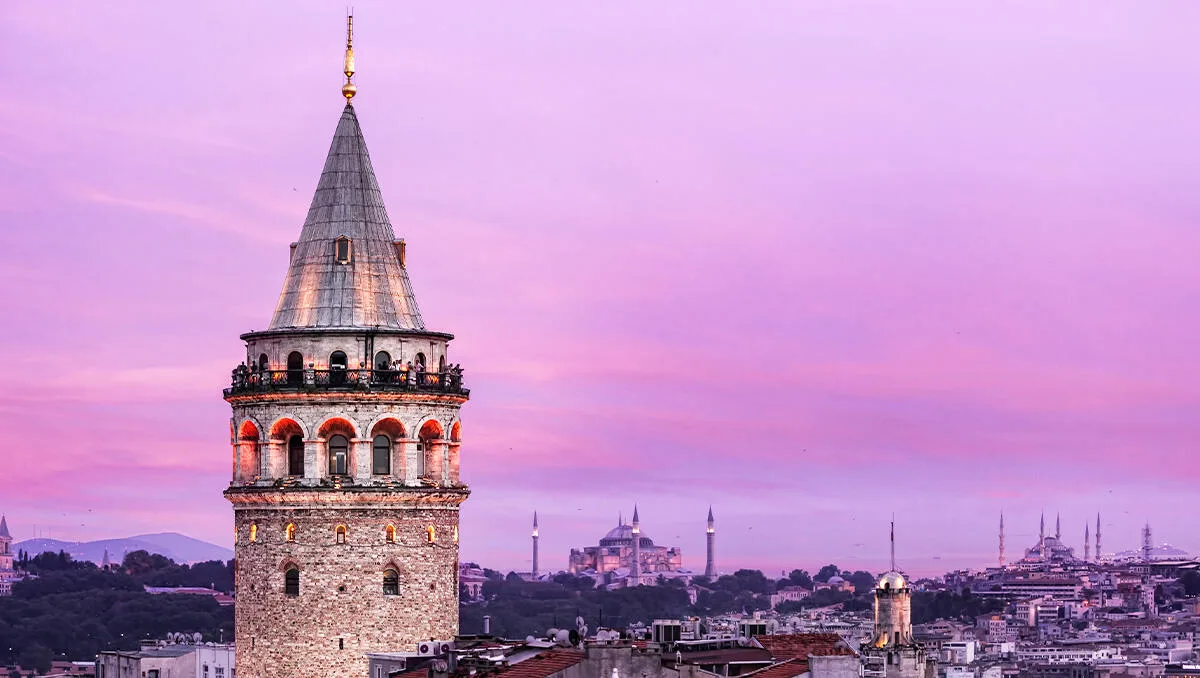
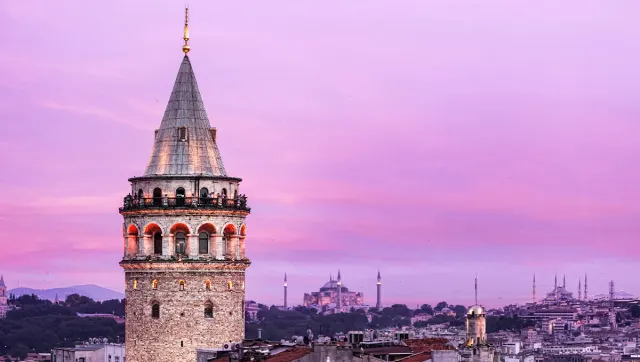
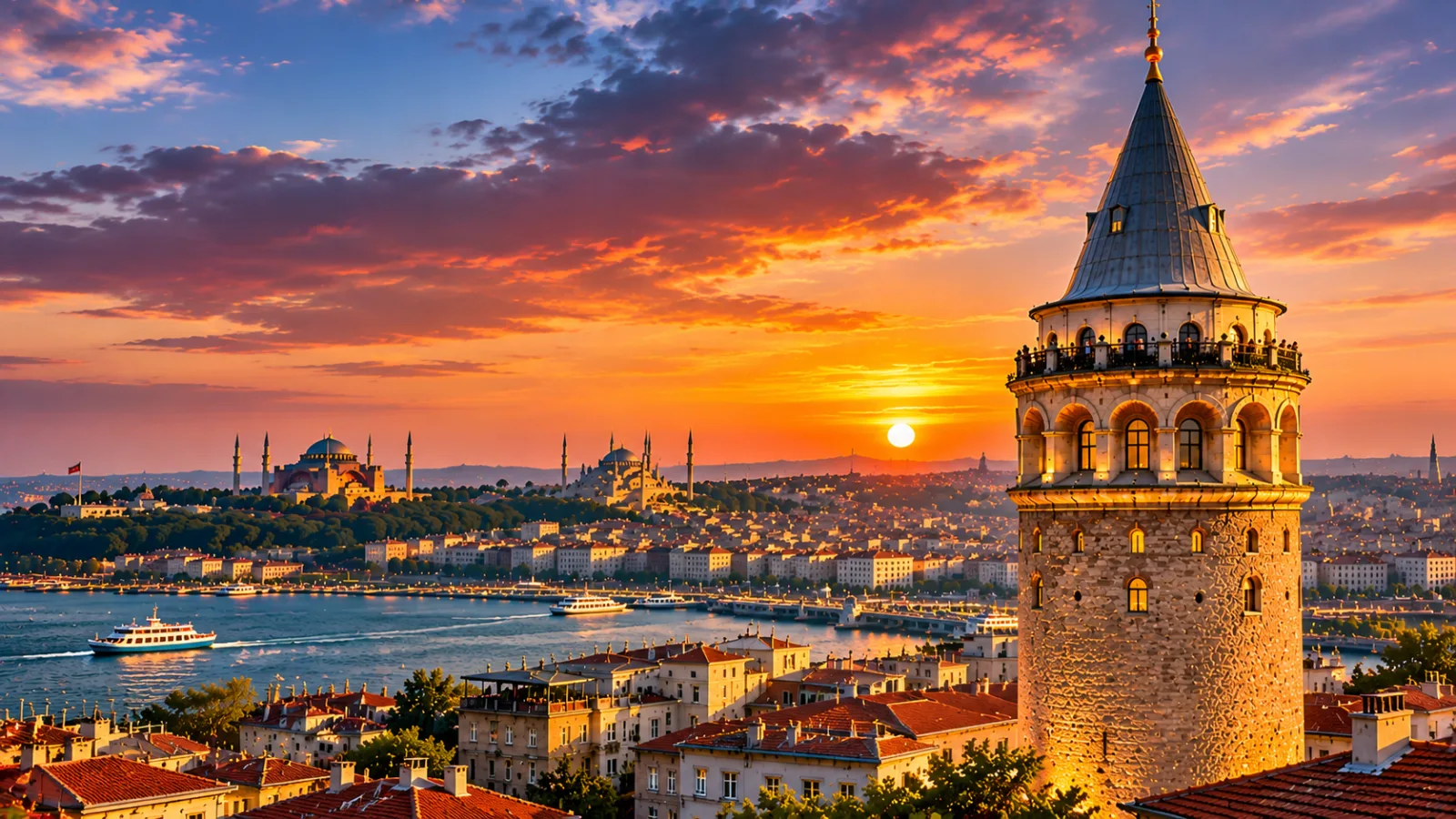
Some landmarks are best admired from a distance. Others are best experienced from the inside. Galata Tower is both. Its pointed stone cone appears on the skyline from almost everywhere in central Istanbul, and from its narrow terrace you can see the entire city unfold in a single sweeping circle.
For many travellers, climbing Galata Tower is the moment Istanbul suddenly makes sense. The historic peninsula lies in front of you, the Golden Horn curves away to one side, the Bosphorus opens up on the other, and Asia waits across the water.
This guide covers the tower's long and surprising history, the legends that surround it, what to expect inside and how to turn your visit into a half-day of exploring one of Istanbul's most charming neighbourhoods.
01 / 13 · 1 min read
A Genoese Tower in a Byzantine City
To understand Galata Tower, you have to go back to the 14th century. At that time, the area north of the Golden Horn was not part of Constantinople in the way we think of it today. It was a self-governing colony of the Republic of Genoa, a powerful Italian trading state.
The Genoese merchants controlled much of the trade in the region, and they protected their colony with strong walls. In 1348 they built a tall stone tower at the highest point of these walls. They called it the Tower of Christ.
The tower was a statement. It showed the strength of the Genoese colony, gave its defenders a clear view over the harbour and the surrounding waters, and dominated the skyline of the neighbourhood.
What Remains of Genoese Galata
Most of the old Genoese walls have disappeared, but the tower survived. As you walk the streets around it, look for small fragments of old stonework, narrow alleys that follow the original street plan and buildings with arched doorways that hint at the area's European past.
02 / 13 · 1 min read
Many Roles Over Many Centuries
After the Ottoman conquest of Constantinople in 1453, Galata became part of the Ottoman capital, and the tower began a long series of new lives.
Over the centuries it was used as:
- A watchtower, offering views over the harbour and the city.
- A prison, at one point holding prisoners of war.
- An observatory, according to some historical accounts.
- A fire lookout, where guards watched for fires in a city of wooden houses and raised the alarm.
Fires and earthquakes damaged the tower several times, and it was repaired and reshaped after each disaster. The conical roof you see today is the result of later restorations. Every era left its mark, which is part of what makes the tower so interesting.
03 / 13 · 1 min read
The Legend of the Flying Man
Galata Tower is tied to one of the most famous stories in Istanbul. According to a 17th-century account, a scholar named Hezarfen Ahmed Celebi attached artificial wings to his arms, jumped from the top of the tower and glided across the Bosphorus, landing on the Asian side.
The story goes that the sultan was so impressed that he rewarded him with gold, but also sent him away, worried that a man who could fly might be dangerous.
Historians still debate how much of the story is true. Was it a real flight, a short glide or simply a legend that grew with each retelling? Whatever the answer, Hezarfen has become part of the tower's identity, and you will find references to him inside.
TripSpoiler tip: When you reach the terrace, look across towards the Asian shore and try to imagine the distance Hezarfen is said to have flown. It makes the legend feel much more real.
04 / 13 · 1 min read
What to Expect Inside
Today Galata Tower works both as a museum and as one of the city's most popular viewpoints.
The Exhibitions
As you go up, exhibitions tell the story of the tower and the Galata district through the centuries: its Genoese founders, its role in Ottoman Istanbul and the people who lived and traded in the neighbourhood. Take a few minutes to look at the displays before heading to the top. They make the view far more meaningful.
The Terrace
At the top, a narrow balcony wraps all the way around the tower. This is where you get the famous 360-degree view.
05 / 13 · 1 min read
The 360-Degree View, Direction by Direction
The view from Galata Tower is a geography lesson in itself. Walk slowly around the terrace and look out for these landmarks.
Towards the Historic Peninsula
Across the Golden Horn lies the old city. You can spot the domes and minarets of the great imperial mosques, the silhouette of Hagia Sophia and the area of Topkapi Palace on the tip of the peninsula.
Towards the Golden Horn
To one side, the Golden Horn stretches inland, crossed by bridges and lined with historic neighbourhoods. The Galata Bridge, with fishermen on its upper level, is right below you.
Towards the Bosphorus and Asia
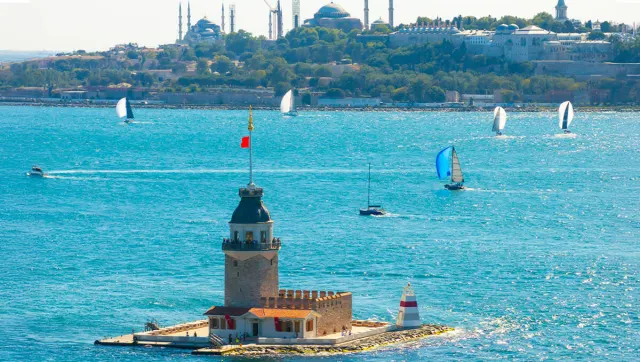
On the other side, the Bosphorus opens up towards the Black Sea. On a clear day, you can see the Asian shore, the Maiden's Tower on its small island and the ferries crossing between continents.
Towards Beyoglu
Behind you rise the hills of Beyoglu, with Istiklal Avenue and the modern city beyond.
TripSpoiler tip: The terrace is narrow, and everyone wants the same photo. Walk the full circle once without stopping, then return to your favourite side for pictures.
06 / 13 · 1 min read
The Best Time to Visit
Sunset
The hour before sunset is the most popular time to visit. The light turns golden over the historic peninsula, and the city slowly lights up. It is spectacular, but it is also the busiest time, and queues can be long.
Morning and Early Afternoon
If you prefer a calmer experience, go earlier in the day. The light is clearer, the terrace is less crowded and you can take your time.
You can check the golden hour for the day of your visit on our Istanbul weather page.
07 / 13 · 1 min read
Exploring the Galata Neighbourhood
The tower is only the beginning. The streets around it are among the most atmospheric in Istanbul, and they deserve at least an hour or two of wandering.
Galip Dede Street
The steep street leading from the tower towards Istiklal Avenue is famous for its music shops, where you can find traditional instruments and hear local musicians trying them out.
Karakoy
Walk downhill and you reach Karakoy, a former port district now full of cafes, galleries and restaurants. It is a great place for a coffee or lunch after your visit.
The Kamondo Stairs
These elegant curving stairs, built in the 19th century, are one of the most photographed spots in the area.
Istiklal Avenue
Uphill from the tower, Istiklal Avenue is Istanbul's busiest pedestrian street, lined with shops, historic buildings and the famous red tram.
08 / 13 · 1 min read
How to Plan Your Visit
How Much Time Do You Need?
A visit to the exhibitions and the terrace usually takes around an hour. If you want to explore the neighbourhood as well, plan half a day.
Getting There
The tower is in the Beyoglu district, within walking distance of Karakoy and Istiklal Avenue. The surrounding streets are steep, so wear comfortable shoes.
Tickets and Queues
Queues can form at busy times, especially around sunset. Booking in advance helps you plan your day. Opening hours can change, so always check the activity page before you go.
Accessibility
The tower has a lift for most of the way up, but some steps remain. If you have mobility concerns, check the details before your visit.
09 / 13 · 1 min read
Combine Galata Tower With Other Experiences
Galata Tower fits naturally into a day of exploring this side of the city:
- Cross the Galata Bridge on foot to the Eminonu side and the Spice Bazaar.
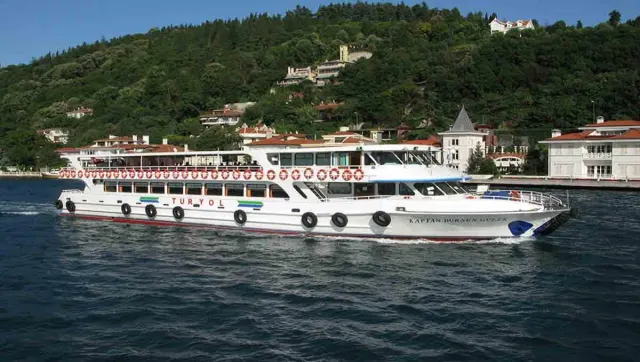
- Take a Bosphorus cruise from the nearby piers to see the tower from the water.
- Walk up to Istiklal Avenue and continue to Taksim Square.
- Enjoy dinner in Karakoy after watching the sunset.
10 / 13 · 1 min read
A Neighbourhood of Many Cultures
For centuries, Galata was one of the most international places in the Ottoman world. Genoese and Venetian merchants, Greek, Armenian and Jewish communities, European diplomats and Ottoman traders all lived and worked within a few streets of the tower.
You can still feel this mix today. Churches, synagogues and mosques stand close to one another, and many of the old stone buildings were once trading houses, banks and consulates. The street now known as Bankalar Caddesi, the Street of Banks, was the financial heart of the late Ottoman Empire. Its grand facades show how important this district once was.
The Galata Mevlevi Lodge
A short walk from the tower stands the Galata Mevlevi Lodge, one of the oldest centres of the Mevlevi order, famous for its whirling ceremonies. Today it is a museum, and its peaceful courtyard and wooden ceremonial hall are a beautiful contrast to the busy streets outside.
11 / 13 · 1 min read
Where to Photograph the Tower From Below
The view from the top is famous, but the tower itself is one of the most photogenic landmarks in Istanbul. Some of the best spots include:
- The narrow streets around the tower, where it suddenly appears at the end of a lane framed by old buildings.
- The Galata Bridge, with the tower rising above the rooftops of Karakoy.
- The Eminonu waterfront, across the Golden Horn, especially at sunset.
- A ferry on the Golden Horn, where the tower sits above the water and the hills of Beyoglu.
TripSpoiler tip: Walk the side streets early in the morning, before the shops open. With empty lanes and soft light, the tower looks completely different.
12 / 13 · 1 min read
Galata Tower at Night
When darkness falls, the tower is lit up and becomes a glowing landmark on the skyline. The surrounding square fills with people, street musicians often play nearby and the cafes stay busy late into the evening.
Even if you visited the terrace during the day, come back after dinner for a walk around the base of the tower. It is one of the most atmospheric evening scenes in the city.
13 / 13 · 1 min read
Why Galata Tower Belongs on Your List
Galata Tower is more than a photo stop. It connects the Genoese, Byzantine and Ottoman layers of the city, it carries one of Istanbul's most charming legends and it gives you the clearest picture of how the city spreads across two continents.
Climb it early in your trip to understand the city, or at sunset to fall in love with it. Then take your time in the streets below. That combination is one of the best ways to experience Istanbul.