Introduction
Many visitors to Istanbul are curious about the Turkish bath, but feel unsure about what actually happens inside. Do you need to know the rules? What should you wear? Will it feel awkward?
The truth is simple. A visit to a traditional hamam is one of the most relaxing and memorable experiences you can have in Istanbul, and you do not need to know anything in advance. The staff will guide you through every step.
This guide explains the history of the hamam, what happens from the moment you arrive, the etiquette that will make you feel at ease and how to choose the right experience for you.
01 / 14 · 1 min read
A Tradition With Deep Roots
Bathing culture in Istanbul has a very long history. The Romans and Byzantines built large public baths in the city, and when the Ottomans arrived, they adapted this tradition and gave it their own character.
In Ottoman society, the hamam was much more than a place to get clean. It was:
- A social space, where friends and neighbours met and talked.
- A place of celebration, used for special occasions such as weddings and births.
- A place of ritual, connected to ideas of purity and wellbeing.
- A place to relax, away from the noise of daily life.
Every neighbourhood had its own hamam, and many historic hamams were designed by great architects. Some of them still operate today and are architectural treasures in their own right.
02 / 14 · 1 min read
The Architecture of a Hamam
Historic hamams follow a similar layout, and understanding it helps you feel more comfortable when you visit.
The Entrance Hall
You enter a large, often domed hall where you are welcomed, change your clothes and relax after the bath. It is usually the coolest part of the hamam.
The Warm Room
A passage leads to an intermediate room with a moderate temperature. It helps your body adjust to the heat.
The Hot Room
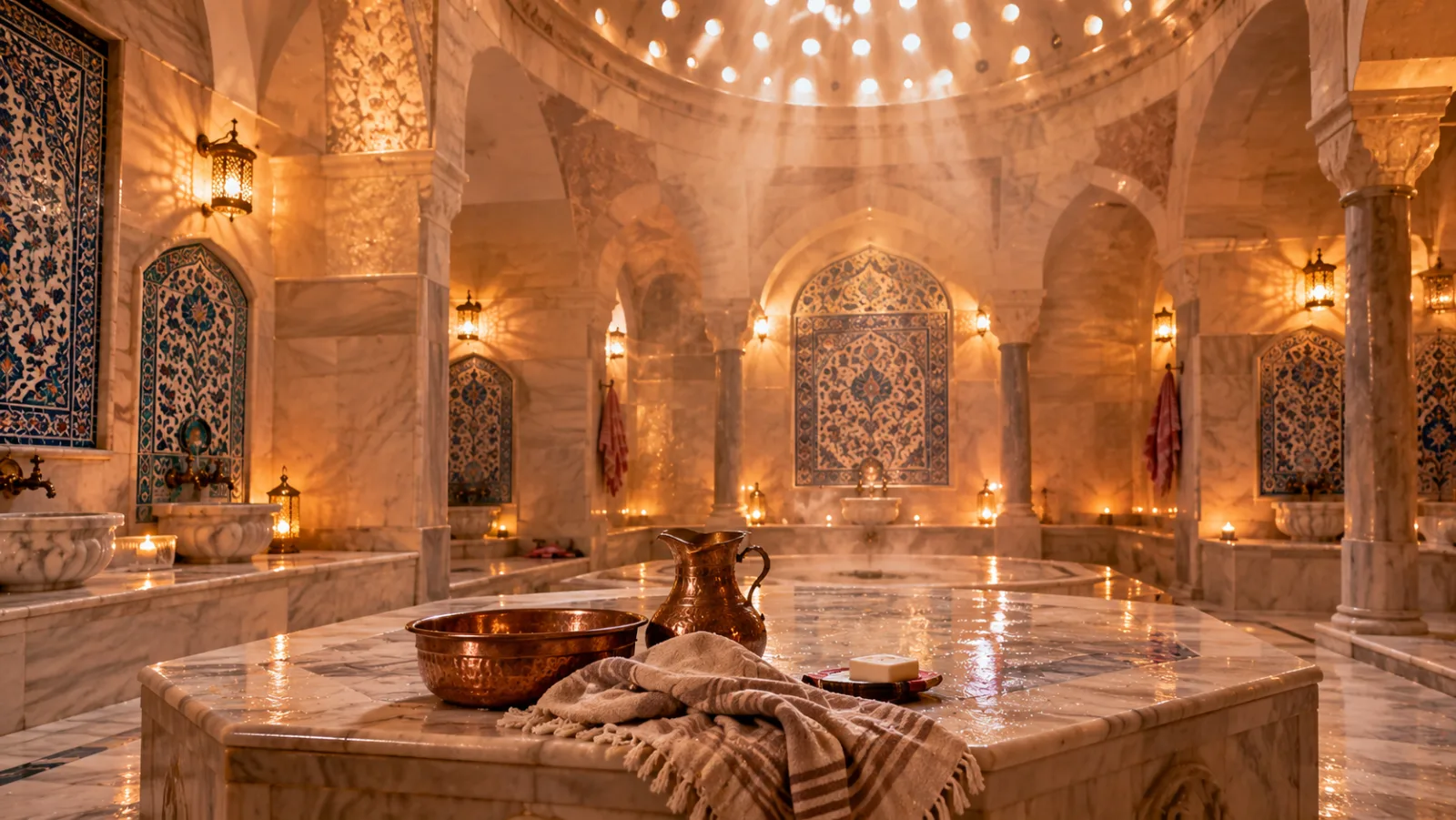
The heart of the hamam is the hot room. In its centre is a large, heated marble platform known as the navel stone. Around it are small basins with taps of hot and cold water.
Look up at the dome. Small glass openings let in soft beams of light, creating a calm, almost magical atmosphere.
03 / 14 · 1 min read
What Happens in a Hamam, Step by Step
Every hamam has its own routine, but most traditional experiences follow these steps.
1. Welcome and Changing
When you arrive, you will be shown to a private changing area. You will receive a peshtemal, a thin cotton cloth to wrap around yourself, and usually slippers. Leave your valuables in a locker if one is provided.
2. Relaxing in the Heat
You enter the hot room and lie on the heated marble platform. The warmth relaxes your muscles and opens your pores, preparing your skin for the scrub. Take your time and let your body adjust. Drink water if you need to.
3. The Scrub
An attendant uses a textured mitt, called a kese, to scrub your skin. It removes dead skin and leaves you feeling incredibly fresh. Many first-timers are surprised by how effective it is.
If you prefer a lighter or stronger scrub, just let the attendant know.
4. The Foam Wash
Next comes the foam wash, one of the most enjoyable parts of the experience. The attendant fills a cloth bag with soap and water and creates a cloud of soft, warm bubbles that covers you completely. It is followed by a gentle massage with the foam.
5. Rinsing
You are rinsed with warm water poured from a bowl, often several times. It is surprisingly relaxing.
6. Rest and Refreshment
Afterwards, you return to the cooler hall, wrapped in fresh towels, to rest. Many hamams serve tea, juice or a refreshing drink. This is the moment to slow down and enjoy how relaxed you feel.
TripSpoiler tip: Do not plan anything demanding right after your hamam. You will feel deeply relaxed, so leave some free time to enjoy that feeling, ideally with a slow walk or a quiet meal.
04 / 14 · 1 min read
Hamam Etiquette for First-Timers
You do not need to worry about the rules, but these simple tips will help you feel at ease:
- Keep the peshtemal on in shared areas.
- Follow the staff's instructions. They will guide you through each step.
- Tell the attendant your preferences, such as a lighter scrub or no massage.
- Drink water before and after, as the heat can make you thirsty.
- Take your time. The hamam is about slowing down, so there is no need to rush.
- Respect the calm atmosphere. Speak quietly and enjoy the peace.
06 / 14 · 1 min read
What to Bring
Most hamams provide what you need, including a peshtemal, towels and slippers. You may want to bring:
- A change of clothes, especially fresh underwear.
- A hair tie or comb if you have long hair.
- Your own toiletries, if you prefer specific products.
- Moisturiser, as your skin may feel dry after the scrub.
Check the activity page to see exactly what is included.
07 / 14 · 1 min read
Who Is a Hamam For?
A traditional hamam is a great choice for:
- Couples looking for a special shared experience.
- Friends who want to relax together.
- Solo travellers who want some time for themselves.
- Anyone tired after sightseeing, especially after a long day of walking.
If you have any health conditions, such as heart or blood pressure problems, or if you are pregnant, check with your doctor before using a hot room.
08 / 14 · 1 min read
When to Visit
A hamam is wonderful at any time of year. In winter, the warmth is especially welcome. In summer, a hamam visit after a long day of sightseeing can be incredibly refreshing.
Many travellers like to visit in the late afternoon or early evening, after a day of exploring. You will leave feeling relaxed and ready for a quiet dinner.
09 / 14 · 1 min read
How Long Does It Take?
Most hamam experiences take one to two hours, including relaxation time. Packages that include extra massages or treatments may take longer.
10 / 14 · 1 min read
The Language of the Hamam
Knowing a few words makes your first visit even more enjoyable:
- Peshtemal: the thin cotton cloth you wrap around yourself.
- Kese: the textured mitt used for the scrub.
- Gobek tasi: the heated marble platform in the centre of the hot room.
- Kurna: the small marble basins with taps of hot and cold water.
- Nalin: traditional wooden bath clogs, once used to walk on hot, wet floors.
- Kopuk: the soft soap foam used in the foam wash.
You do not need to use these words, but recognising them helps you understand what is happening around you.
11 / 14 · 1 min read
Hamam Myths and Truths
Many first-timers arrive with questions. Here are a few common ones:
Is it too hot?
The hot room is warm, but you can always step out, cool down with water or ask for a break. Everyone adjusts at their own pace.
Is the scrub painful?
The scrub is firm, but it should never hurt. If it feels too strong, simply tell the attendant.
Do I need to know what to do?
Not at all. The staff guide you through every step, and they are used to welcoming first-time visitors from around the world.
TripSpoiler tip: If you feel shy, choose a private or couple experience for your first visit. Once you know the routine, you may want to try a traditional shared hamam next time.
12 / 14 · 1 min read
The Architecture of Historic Hamams
Some of Istanbul's historic hamams are architectural masterpieces, and several were designed by the great Ottoman architect Mimar Sinan in the 16th century.
Look up when you enter the hot room. The domes are pierced with small glass openings, often shaped like stars or circles, which let in soft beams of daylight. Marble covers the walls and floors, and the proportions of the rooms create a calm, almost sacred atmosphere.
Even if you are not interested in architecture, these details make a hamam visit feel very different from a modern spa.
13 / 14 · 1 min read
Combine a Hamam With Your Day
A hamam fits perfectly at the end of a busy day:
- After exploring Sultanahmet, when your legs are tired from walking.
- After a day at the Grand Bazaar, to relax after the crowds.
- Before a quiet dinner, when you feel calm and refreshed.
Avoid planning a hamam right before a long tour or a flight. Give yourself time to enjoy the relaxation afterwards.
14 / 14 · 1 min read
Why You Should Try a Turkish Bath
A traditional hamam is more than a spa treatment. It is a living part of Istanbul's culture, enjoyed for centuries by people from every part of society.
You leave with clean, soft skin, relaxed muscles and a calm mind, but also with a deeper understanding of the city's traditions. Try it once, and you will understand why so many visitors make it a ritual on every trip to Istanbul.