Introduction
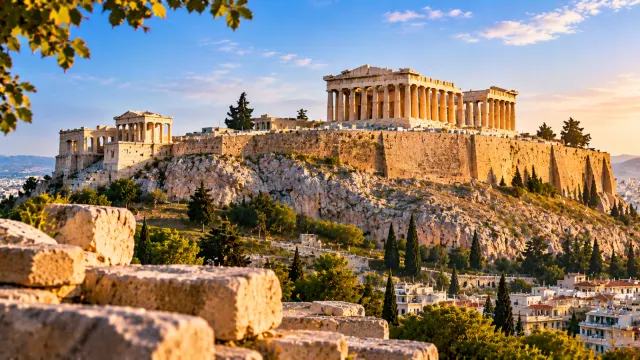
If the Acropolis was the religious heart of ancient Athens, the Agora was its everyday heart. This was where citizens shopped, met friends, argued about politics and listened to philosophers. Today it is a green, peaceful archaeological park just below the Acropolis, and one of the most rewarding sites in the city.
01 / 05 · 1 min read
Why the Agora Matters
The Agora was the centre of political, commercial and social life in ancient Athens. Democratic institutions met here, laws were displayed here, and Socrates spent his days here questioning anyone who would listen. Walking along its paths, you are following in the footsteps of the people who shaped Western thought.
02 / 05 · 1 min read
What to See
The Temple of Hephaestus
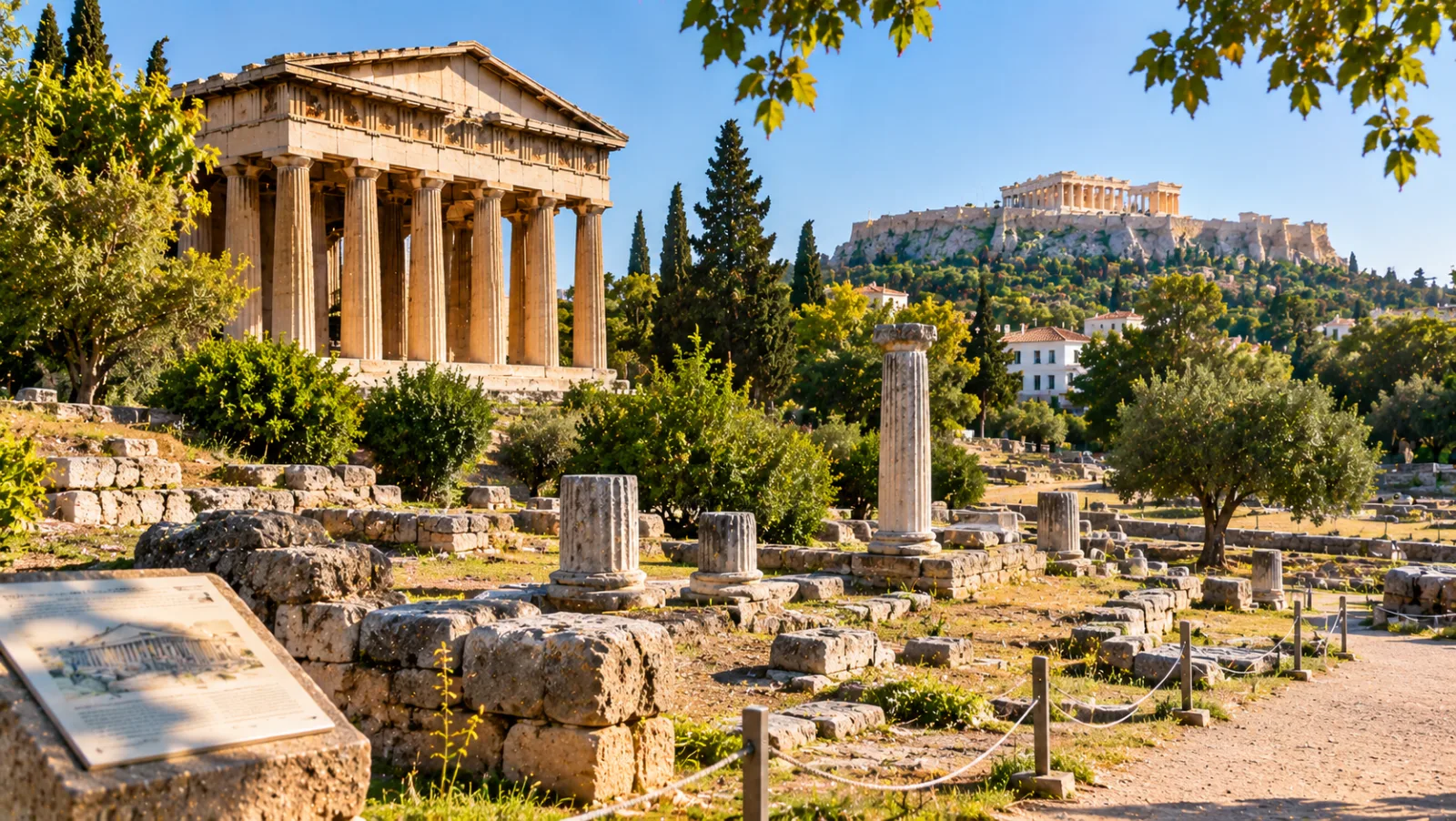
On a low hill at the western edge of the Agora stands one of the best-preserved ancient Greek temples anywhere. Built in the 5th century BC and dedicated to Hephaestus, god of metalworking, it still has its roof and columns, giving you a real sense of what a classical temple looked like.
The Stoa of Attalos
This long, two-storey colonnaded building was originally a gift from a king of Pergamon. It was reconstructed in the 20th century and now houses the Museum of the Ancient Agora, with everyday objects such as pottery, coins, voting tokens and a device used to select citizens for public duties.
The Church of the Holy Apostles
A small Byzantine church from around the 10th century, with lovely frescoes, stands in the middle of the ancient site.
The Panathenaic Way
The ancient processional road that crossed the Agora and climbed to the Acropolis. You can still walk along part of it.
03 / 05 · 1 min read
How Long Do You Need?
Allow about one and a half to two hours to explore the site and the museum.
04 / 05 · 1 min read
Tips for Your Visit
- Go early or late in the day; there is shade under the trees, but it gets hot in summer.
- Check whether a combined ticket that includes the Agora suits your plans.
- Bring water and wear comfortable shoes for uneven paths.
- Climb up to the Temple of Hephaestus for lovely views of the Acropolis.
- A guided tour helps bring the ruins and their stories to life.
05 / 05 · 1 min read
Getting There
The main entrance is a short walk from Monastiraki metro station and from the Thissio station. It is easy to combine with the Acropolis, Plaka and the Roman Agora.