Introduction
Flights and hotels are usually the first things travelers budget for. Sightseeing often comes last, and that is where many trips go over budget. Entrance fees, guided tours, transport and coffee breaks are small one by one, but together they can make a real difference.
This guide shows you how to plan a realistic sightseeing budget, step by step, and how to save money without missing the experiences you came for.
01 / 09 · 1 min read
Step 1: List What You Really Want to Do
Start with your short list of attractions and experiences. For each one, note:
- The ticket price (or price range)
- Whether you want a guide or audio guide
- Whether it requires transport
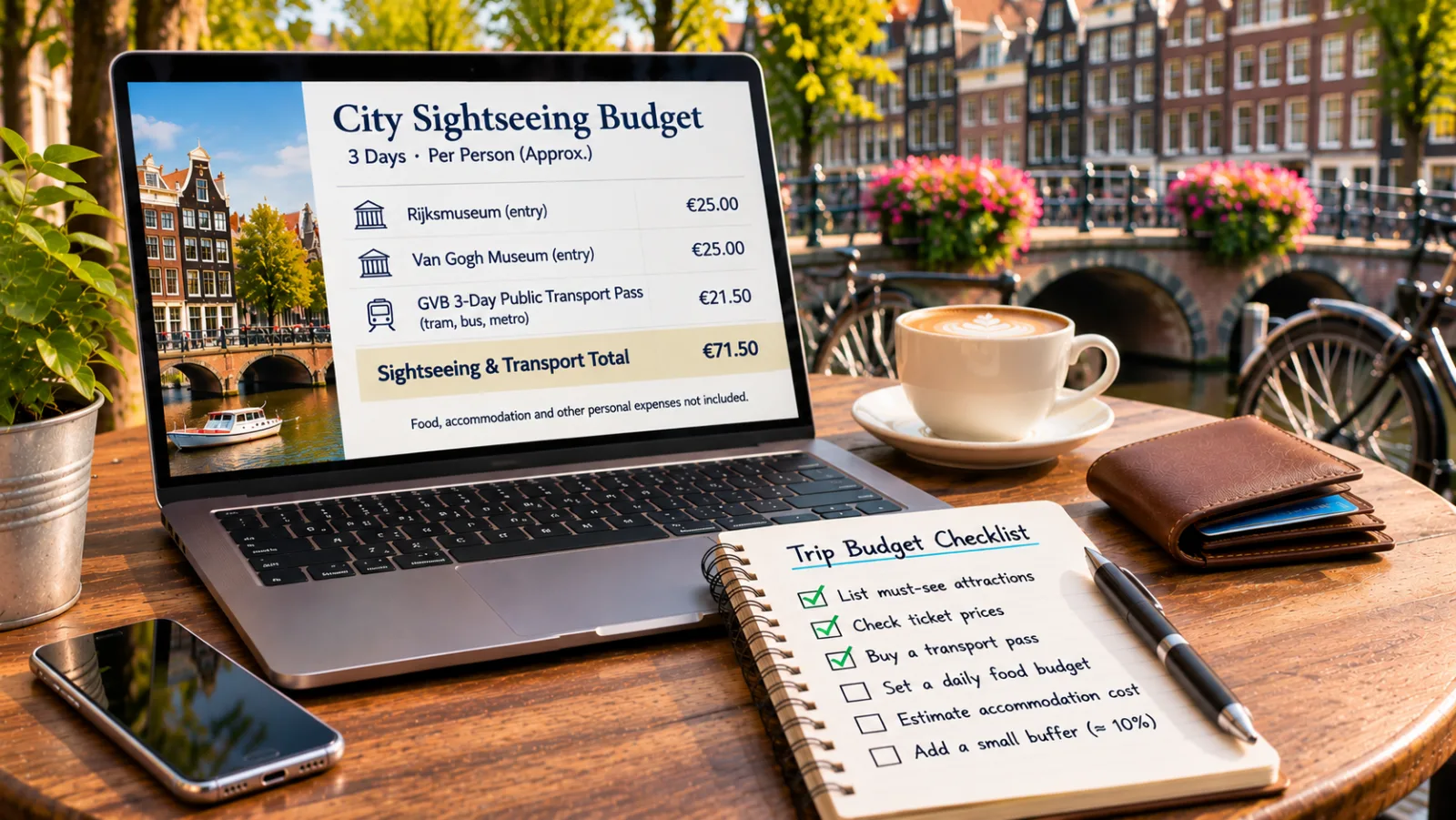
Use official websites or booking platforms to check current prices, as they change with seasons and over time.
02 / 09 · 1 min read
Step 2: Understand the Main Cost Categories
Attraction tickets
Museums, palaces, towers and historic sites usually charge an entrance fee. Famous landmarks tend to cost more than smaller sites.
Tours and experiences
Guided tours, boat trips, food tours and shows are often the most memorable parts of a trip, and usually the biggest sightseeing expense.
Local transport
Public transport, taxis and transfers. Reloadable transport cards are often cheaper than single tickets.
Food and drinks
Meals, snacks, coffee and water add up quickly during long sightseeing days.
Extras
Souvenirs, tips, cloakrooms and small unexpected costs.
03 / 09 · 1 min read
Step 3: Add a Buffer
Plans change. You may discover a tour you did not know about or decide to take a taxi after a long day. Adding a buffer of around 10 to 15 percent to your sightseeing budget keeps surprises from becoming stress.
04 / 09 · 1 min read
Step 4: Compare Single Tickets With a City Pass
A city pass bundles several attractions, often with transport or fast-track entry. It can save money, but only if you use it enough.
- Add up the single ticket prices for the attractions you definitely want to visit.
- Compare the total with the pass price.
- Consider the time savings and convenience, not just the money.
If you only plan to visit two or three paid sights, single tickets are usually simpler and cheaper.
05 / 09 · 1 min read
Where Travelers Often Overspend
- Eating next to major attractions, where prices are often highest.
- Last-minute taxis because of poor planning.
- Buying tickets from unofficial sellers at inflated prices.
- Paying for passes they barely use.
- Card fees from paying in their home currency abroad.
06 / 09 · 1 min read
Smart Ways to Save
- Walk whenever distances allow; it is free and the best way to see a city.
- Use free attractions: parks, markets, viewpoints, neighborhoods and many religious sites.
- Look for reduced prices for students, children and seniors, and bring ID.
- Carry a water bottle and snacks.
- Eat your main meal at lunch, when many restaurants are more affordable.
- Choose one "splurge" experience you will remember, and keep the rest simple.
07 / 09 · 1 min read
Where Not to Cut Costs
Saving money is good, but some expenses are worth it:
- A good guide at a complex site can turn a confusing visit into the highlight of your trip.
- Skip-the-line tickets in high season can save hours of your limited time.
- Travel insurance protects your whole investment.
08 / 09 · 1 min read
Track Your Spending
A simple note on your phone or a budgeting app helps you see where your money goes. Check it each evening; small adjustments early prevent big surprises later.
09 / 09 · 1 min read
Final Thoughts
A sightseeing budget is not about spending as little as possible. It is about spending on what matters to you. List your priorities, check real prices, compare passes with single tickets and keep a small buffer. You will enjoy your trip more, knowing exactly where your money is going.
TripSpoiler lets you compare tickets, tours and city passes side by side, so you can choose the options that fit both your plans and your budget.