Topkapı Sarayı ve
Harem Rehberi: Tarih, Biletler ve Bilinmesi Gerekenler
Topkapı Sarayı'nın katmanlı tarihini ve İstanbul'daki büyüleyici Harem bölümünü keşfedin. İmparatorluk avlularından özel kraliyet odalarına kadar, olağanüstü bir saray kompleksinde Osmanlı İmparatorluğu'nun yüzyıllarca süren tarihi nasıl yönettiğini, yaşadığını ve şekillendirdiğini keşfedin.
Topkapı Sarayı ve Harem İçerisine Sesli Rehber Eşliğinde Rehberli Giriş
Bu deneyimi keşfedin →Topkapı Sarayı ve Harem'in İçinde: Güç, Mahremiyet ve Osmanlı İmparatorluğu
İstanbul imparatorlukların katmanlaştığı bir şehirdir.
Roma temelleri. Bizans kubbeleri. Ottoman courtyards.
And among these layers, few places explain the Ottoman world as clearly as Topkapi Palace.
For nearly four centuries, this palace complex functioned as the political, administrative, and symbolic center of one of history’s most expansive empires. Ancak Topkapı Sarayı'nı anlamak sadece tarihleri ezberlemek ya da mimariye hayranlık duymak değildir. It is to understand how space, hierarchy, ritual, and privacy shaped governance itself.
Topkapi was not just where rulers lived.
It was how they ruled.
The Strategic Location: Geography as Power
Before entering its gates, look at where the palace stands.
Topkapi Palace was built on a promontory overlooking the Bosphorus, Haliç ve Marmara Denizi. From here, the Ottomans could visually command major maritime routes connecting Europe and Asia.
This was not aesthetic coincidence.
Geography reinforced authority. Görünürlük hakimiyeti simgeliyordu. The palace’s position allowed rulers to remain both physically elevated and strategically aware.
Even today, standing on its terraces offers a perspective that feels deliberate — as if the city unfolds below the logic of empire.
Architecture as Hierarchy
Unlike European palaces built as singular monumental structures, Topkapi Palace evolved organically. It consists of multiple courtyards, pavilions, administrative buildings, and private chambers arranged in a sequence of increasing restriction.
The design follows a clear principle: access equals privilege.
The First Courtyard was relatively public. İkinci Avlu idari alan işlevi görüyordu. Üçüncü Avlu elit siyasi alanın derinliklerine açılıyordu. Beyond that lay the private world of the sultan.
Movement through the palace mirrored political structure.
Every gate filtered authority.
Every threshold marked rank.
Architecture here was not decorative — it was procedural.
Ceremony and Silence
Ceremony was central to Ottoman governance.
Foreign ambassadors entering Topkapı Sarayı, koreograflanmış mekanlarda dikkatle yönlendirildi. Sessizlik, mesafe ve mekânsal düzenleme gücün gizemini pekiştiriyordu. Sultan nadiren gelişigüzel ortaya çıktı. Varlığı kontrol edildi. Authority was theatrical — but calculated.
In the Imperial Council Chamber, state officials debated issues ranging from military campaigns to economic regulation. Yet even there, the sultan could observe unseen through hidden screens.
Power was present — even when invisible.
The Treasury: Materializing Authority
The Imperial Treasury houses objects that once symbolized the empire’s legitimacy. Süslü silahlar, mücevherlerle kaplı eserler ve tören eşyaları zenginlikten fazlasını yansıtıyordu. They communicated continuity, divine favor, and dominance.
Material culture functioned as political language.
To modern visitors, these displays may appear luxurious. To contemporaries, they were signals — carefully curated expressions of sovereign strength.
Nearby, the Sacred Relics section underscores another dimension of rule: spiritual authority. The preservation of religious artifacts reinforced the Ottoman claim not only to political leadership, but to custodianship within the Islamic world.
In Topkapi Palace, governance and faith intersected.
The Harem: The Private Dimension of Empire
Few areas of the palace provoke as much fascination as the Harem.
Popular imagination often reduces it to fantasy. The historical reality was structured and complex.
The Harem was an institutionalized domestic sphere with hierarchy, education systems, and strict protocol. Women within the Harem were trained, ranked, and integrated into palace life. At its apex stood the Valide Sultan — the Queen Mother — whose influence could shape succession politics and imperial policy.
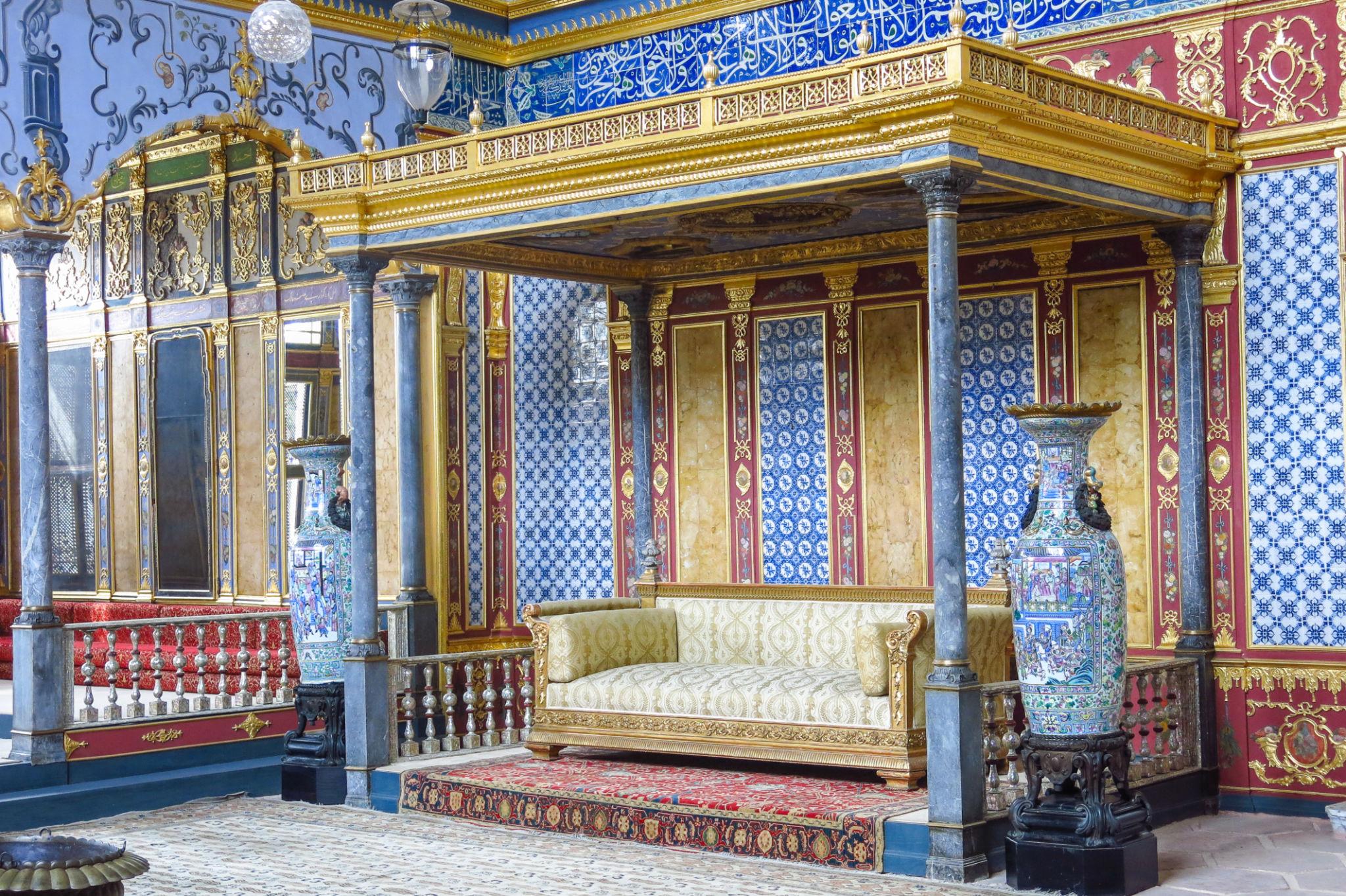
The architectural transition into the Harem reflects intimacy. Geniş avluların yerini dar koridorlar alıyor. İznik çinileri, karmaşık mavi desenlerle duvarlara hakimdir. Light filters softly through windows, creating enclosed atmosphere.
If the outer palace represented public authority, the Harem represented private strategy.
Power here was quieter — but no less significant.
Daily Life Within the Palace Walls
Beyond politics and ceremony, Topkapi Palace was a living environment.
Servants, cooks, artisans, scribes, guards, and educators maintained daily operations. Mutfaklar bir zamanlar binlerce kişiye yemek hazırlıyordu. Avlular yürüyüşlere ev sahipliği yaptı. Pavilions served as seasonal retreats.
The palace functioned as a small city.
Its organization reflected the empire’s administrative sophistication. Eğlence alanları bile kasıtlıydı. Gardens, terraces, and kiosks offered carefully framed views of water and sky — reinforcing the sultan’s symbolic position above the world he governed.
Visiting Topkapi Palace Today
Today, Topkapi Palace operates as a museum complex. Yet its layered design remains intact.
To experience it meaningfully:
- Allow several hours
- Move gradually through each courtyard
- Observe spatial transitions
- Pay attention to architectural details
The palace is not a place for rushed tourism. Aşamalı olarak kendini gösterir.
Güvenlik kontrolleri tüm ziyaretçiler için zorunludur ve yoğun sezonlar daha uzun bekleme süreleri getirebilir. Arriving early in the morning often allows for a calmer experience.
Most importantly: slow down.
This is not a monument that overwhelms through scale. It persuades through structure.
Why Topkapi Palace Still Matters
In a city defined by iconic landmarks, Topkapi Palace remains foundational because it explains how the Ottoman Empire functioned spatially.
It shows that power was not abstract.
It was organized.
It was ritualized.
It was embedded in architecture.
And centuries later, those embedded systems remain visible to those willing to look carefully.
To walk through Topkapi is to move through governance itself — not in theory, but in stone, tile, and threshold.
Seyahatinizi dönüştürün ilham verici bir seyahat hikayesi
TripSpoiler deneyiminizi paylaşın ve gelecekteki gezginlerin daha iyi bilgiler, daha akıllı planlama ve unutulmaz anlarla şehirleri keşfetmesine yardımcı olun.
Deneyiminiz bir sonraki harika geziye ilham verebilir



İncelemeniz gönderildi
Deneyiminizi paylaştığınız için teşekkür ederiz.