はじめに
Most palaces in Europe were built to be admired from the outside: a long facade, a grand staircase, a garden laid out for show. Topkapi Palace does the opposite. From the street you see thick walls and a single monumental gate. Nothing prepares you for what lies behind it.
Step inside and you find a city within a city. There are courtyards opening onto other courtyards, pavilions scattered across terraces, kitchens big enough to feed an army, libraries, schools, treasure rooms and private apartments hidden behind layers of gates. For nearly 400 years, this was the place where the Ottoman Empire was governed, where its future leaders were trained and where its rulers lived their daily lives.
This guide takes you through Topkapi the way you will actually experience it, from the outer gate to the most private rooms of the Harem. Along the way, it points out the stories and details that turn a quick visit into one of the most memorable days of your trip.
01 / 10 · 約1分で読めます
A Palace Built for a New Capital
When Sultan Mehmed II conquered Constantinople in 1453, he did not just take a city. He took the capital of an empire that had lasted more than a thousand years, and he wanted a residence that matched that ambition.
Construction of Topkapi began a few years after the conquest, on the tip of the historic peninsula. The location was no accident. From this hill, the palace looked over three bodies of water: the Bosphorus, the Golden Horn and the Sea of Marmara. It was easy to defend, open to the breeze and impossible to miss for any ship arriving in the city.
Unlike many European palaces, Topkapi was never designed as one single building. It grew over centuries. Each sultan added pavilions, rooms and decorations that reflected his taste and his era. That is why walking through Topkapi feels like turning the pages of a long history book, with each chapter written in a slightly different style.
Not Just a Home
It is easy to imagine Topkapi as a luxurious royal residence, but that is only part of the story. The palace was also:
- The seat of government, where the empire's most important decisions were discussed.
- A school, where talented young men were trained to become administrators and military leaders.
- A treasury, holding the wealth and the most precious objects of the dynasty.
- A household, home to the sultan's family and the many people who served them.
Understanding these different roles makes the layout of the palace much easier to follow.
02 / 10 · 約1分で読めます
From Royal Residence to Museum
By the 19th century, the Ottoman Empire was changing. The sultans wanted a more modern residence, and in the middle of the century the court moved to the new Dolmabahce Palace on the shores of the Bosphorus.
Topkapi did not lose its importance overnight. It continued to hold the treasury, the sacred relics and parts of the palace administration. After the founding of the Turkish Republic, the palace was turned into a museum in 1924, and its doors were opened to the public.
Today, Topkapi is part of the Historic Areas of Istanbul, listed as a UNESCO World Heritage Site, and it remains one of the most visited places in the country.
03 / 10 · 約3分で読めます
Understanding the Layout: Four Courtyards
The key to enjoying Topkapi is understanding how it is organised. The palace is built around a series of courtyards, each one more private and more exclusive than the one before. As you move inward, you move closer to the personal world of the sultan.
The First Courtyard: The Public Face of the Palace
You enter through the Imperial Gate, a massive stone gateway near Hagia Sophia. Beyond it lies the First Courtyard, a wide, tree-lined space that was once open to a broad range of people, from craftsmen and servants to visitors with business at the palace.
Here you will also find Hagia Irene, one of the oldest Byzantine churches in the city. It was never converted into a mosque and was used for many years as an arsenal. Its simple, powerful interior is a striking contrast to the decoration you will see later.
The Second Courtyard: Where the Empire Was Governed
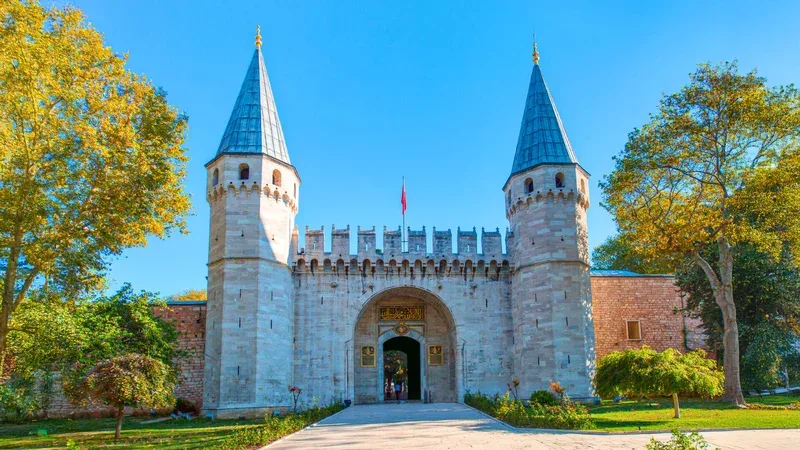
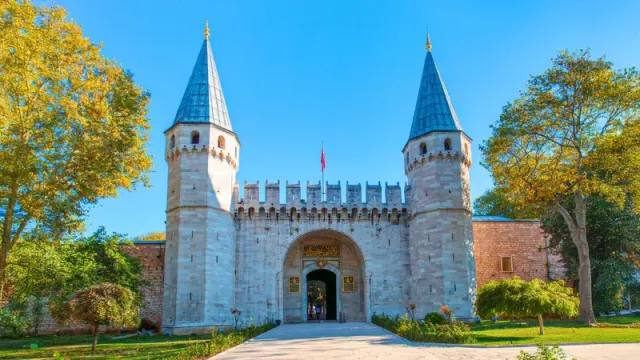
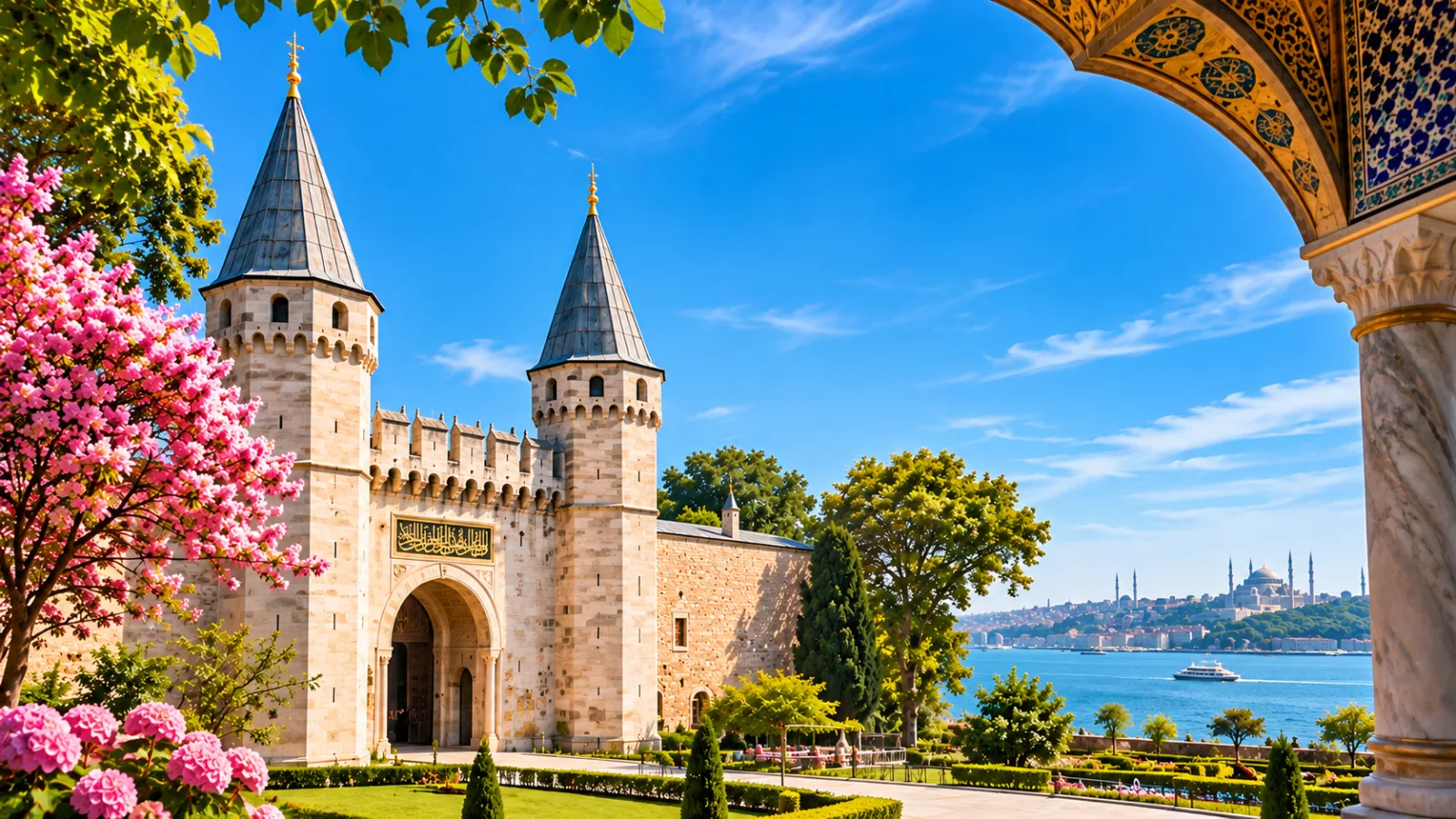
The Gate of Salutation, with its two pointed towers, marks the start of the palace proper. Only a limited number of people were allowed to pass it, and everyone except the sultan entered on foot.
The Second Courtyard was the administrative heart of the empire. Its most important building is the Imperial Council Hall, where the grand vizier and other high officials met to discuss state affairs. Look for the small window above the council room. According to tradition, the sultan could listen to the discussions from behind it without being seen, which meant no one ever knew for sure whether he was listening.
Above the council hall rises the Tower of Justice, visible from far across the city. It was a symbol of the sultan's watchful presence over his empire.
The Palace Kitchens
On one side of the Second Courtyard stand the palace kitchens, marked by a long row of chimneys. Their size tells you more about daily life at Topkapi than any throne room. On busy days, the kitchens prepared meals for thousands of people.
Today they house a remarkable collection of porcelain, including Chinese and Japanese pieces collected by the palace over centuries. It is one of the most impressive porcelain collections in the world and a section many visitors walk straight past.
The Third Courtyard: The Sultan's Private World
The Gate of Felicity leads to the inner palace. Beyond this point, life was quiet, controlled and reserved for the sultan and those closest to him.
Just behind the gate stands the Audience Chamber, where the sultan received foreign ambassadors and high officials. Imagine arriving here as a visiting diplomat, having crossed courtyard after courtyard, with every gate designed to make you feel the power of the empire.
The Third Courtyard was also home to the palace school. Here, carefully selected young men studied languages, religion, music, calligraphy, warfare and administration. Many of them went on to become governors, generals and even grand viziers.
The Fourth Courtyard: Pavilions and Views
The Fourth Courtyard feels completely different. It is a series of gardens and terraces dotted with elegant pavilions, built for rest, celebration and enjoying the view.
The Baghdad Kiosk and the Revan Kiosk, both built in the 17th century to celebrate military campaigns, are among the most beautiful buildings in the palace. Their tiled walls, wooden ceilings and mother-of-pearl details are exceptional. Nearby, a small terrace with a gilded canopy looks out over the Golden Horn.
TripSpoiler tip: Save some energy for the Fourth Courtyard. Many visitors are tired by the time they reach it and rush through, but the views and the pavilions here are some of the best parts of the whole palace.
04 / 10 · 約1分で読めます
The Imperial Harem: Life Behind Closed Doors
No part of Topkapi has inspired as many stories as the Harem, and few parts are as misunderstood.
The word harem simply refers to the private family quarters of the palace. It was not a place of endless luxury and intrigue, as many European paintings suggested, but a carefully organised household with its own rules, hierarchy, education and daily routines. The sultan's mother, his wives, his children and many attendants lived here, and the most powerful women of the empire had real influence over palace life.
What to See in the Harem
The Harem is a maze of more than a hundred rooms, though only part of it is open to visitors. Some highlights include:
- The Courtyard of the Black Eunuchs, the entrance area where the guards of the Harem lived and worked.
- The apartments of the Valide Sultan, the sultan's mother, who was often the most powerful woman in the palace.
- The Imperial Hall, a domed hall used for celebrations and entertainment.
- The Privy Chamber of Murad III, considered one of the finest rooms of the palace, with exquisite tile work.
- The Twin Kiosks, the apartments of the crown princes, with beautiful painted and stained-glass decoration.
As you walk through the narrow corridors, small courtyards and tiled rooms, you start to understand how many people lived here and how closely their lives were connected.
TripSpoiler tip: The Harem is often less crowded than the Treasury. Visit it early in your tour, when you still have the energy to enjoy the details.
Is the Harem Included in Your Ticket?
Not every ticket includes the Harem. Because it is one of the most atmospheric parts of the palace, it is worth checking what is included before you book, so you do not have to queue again or miss it.
05 / 10 · 約1分で読めます
The Imperial Treasury: The Wealth of an Empire
The Imperial Treasury is where Topkapi's reputation for dazzling objects comes from. Its rooms are filled with jewelled thrones, ceremonial armour, precious boxes and gifts sent to the sultans from around the world.
The two most famous pieces are:
- The Spoonmaker's Diamond, a large pear-shaped diamond surrounded by smaller stones, with a famous legend about a fisherman who found it and traded it for three spoons.
- The Topkapi Dagger, decorated with large emeralds and a small watch hidden in its handle.
The Treasury is usually one of the busiest sections of the palace. Be patient, take your time in front of the cases and look beyond the most famous objects. Some of the smaller pieces are just as impressive.
06 / 10 · 約1分で読めます
The Sacred Relics
In the rooms known as the Privy Chamber, Topkapi holds a collection of objects of great religious importance, gathered over centuries. They include items associated with the Prophet Muhammad and other figures from religious history.
This section has a very different atmosphere from the rest of the palace. Visitors are quieter, and the recitation of the Quran can often be heard. It is a place of respect, so dress modestly and behave as you would in a place of worship.
07 / 10 · 約1分で読めます
The Details Most Visitors Miss
Topkapi rewards slow, curious visitors. Here are a few details that are easy to overlook:
- The window above the Imperial Council Hall, where the sultan could listen unseen.
- The porcelain in the kitchens, one of the most important collections of its kind.
- The changing tile styles from one pavilion to the next, which show how taste evolved over centuries.
- The small inscriptions above doorways, many of them poems and prayers in elegant calligraphy.
- The views from the Fourth Courtyard, which explain why this hill was chosen in the first place.
- The trees of the courtyards, some of them very old, which once made the palace feel like a garden.
08 / 10 · 約1分で読めます
How to Plan Your Visit
How Much Time Do You Need?
Topkapi is large, and a rushed visit rarely does it justice. If you want to see the main courtyards, the Treasury and the Harem, plan at least half a day. History lovers can easily spend longer.
When to Go
Arriving early is usually the most relaxed option. The courtyards are calmer, the queues for popular sections are shorter, and the morning light is beautiful on the pavilions. Opening days and hours can change, so always check the activity page before you go.
What to Wear and Bring
You will walk a lot, often on uneven stone surfaces, so comfortable shoes are essential. Modest clothing is recommended, especially for the Sacred Relics. In summer, bring water and sun protection, as some courtyards have little shade.
Audio Guide or Guided Tour?
An audio guide lets you move at your own pace and stop wherever you like. A guided tour helps you understand the stories behind each room and saves you time finding your way. If it is your first visit, a guide can make the layout much easier to understand.
09 / 10 · 約1分で読めます
Combine Topkapi With Nearby Sights
Topkapi sits in the heart of Sultanahmet, which makes it easy to combine with other highlights:
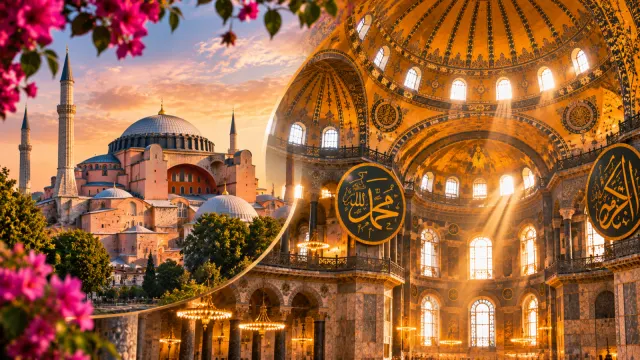
- Hagia Sophia, just outside the Imperial Gate.
- The Basilica Cistern, a short walk away, perfect for a cool break.
- Gulhane Park, once part of the palace gardens, ideal for a rest under the trees.
- The Istanbul Archaeology Museums, right next to the palace walls.
Many travellers plan one full day around this area and still leave wanting more.
10 / 10 · 約1分で読めます
Why Topkapi Is Worth Your Time
Topkapi Palace is not just a collection of beautiful rooms. It is the best place in Istanbul to understand how the Ottoman Empire actually worked: who lived here, how power was organised and how daily life unfolded behind the walls.
Go with enough time, a good ticket and a little curiosity. Look up at the ceilings, read the inscriptions, pause on the terraces and imagine the people who once walked these courtyards. Do that, and Topkapi will become one of the highlights of your trip to Istanbul.