Hagia Sophia Istanbul:
History, Visiting Tips and How to Skip the Ticket Lines
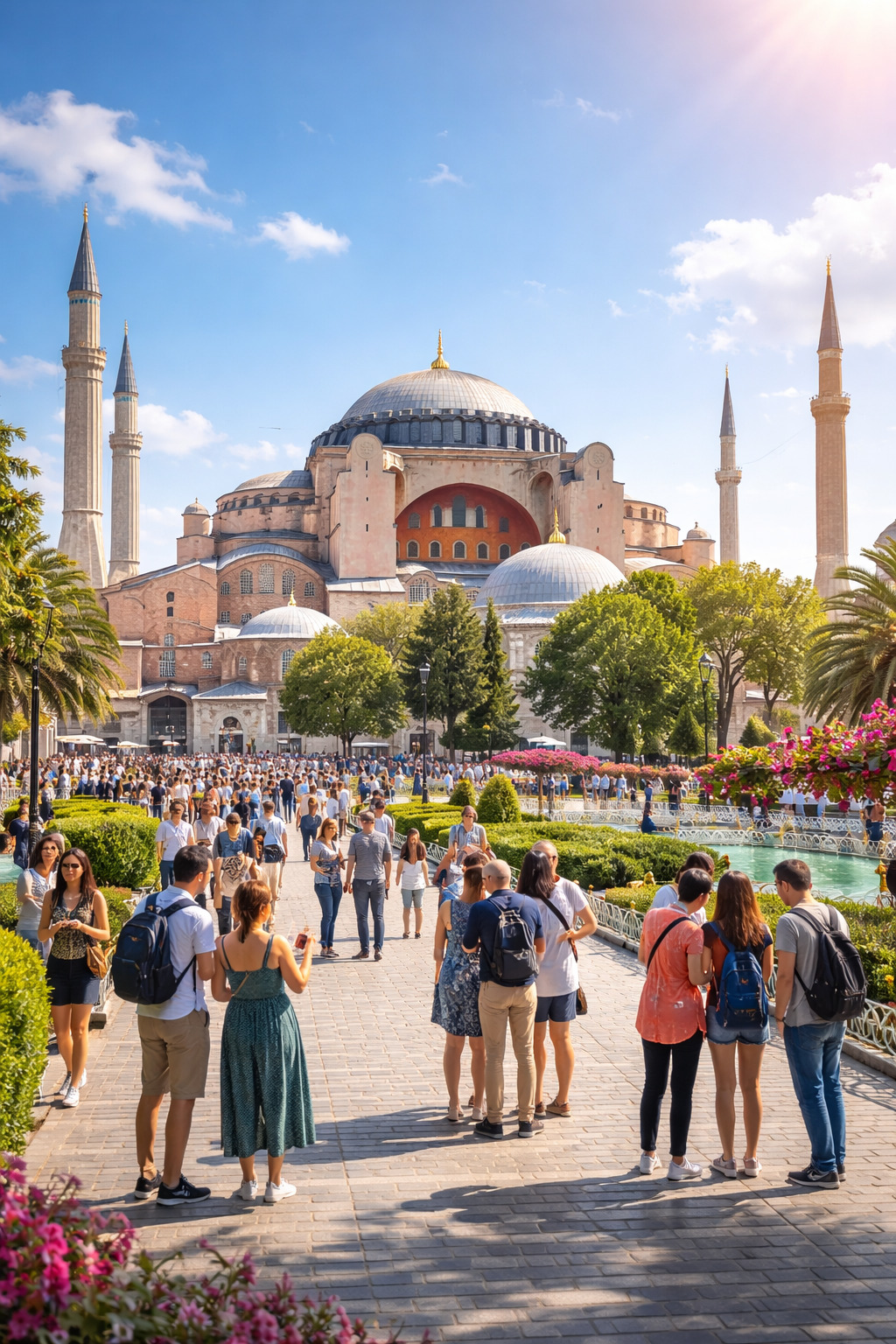
Hagia Sophia in Istanbul is one of the world’s most iconic monuments, blending Byzantine architecture and Ottoman heritage under one magnificent dome. Built in 537 AD, it has served as a cathedral and later as a mosque, carrying nearly 1500 years of history within its walls. Today, visitors can explore its Visiting Area and Upper Gallery, admire breathtaking mosaics and Islamic calligraphy, and experience its layered past. Planning ahead and securing skip the ticket line access can help you enjoy a smoother visit to this timeless landmark.
Hagia Sophia Skip the line Ticket with Audio Guide and Augment Reality
Explore this experience →Hagia Sophia Istanbul: A Monument Beyond Time
In the heart of Istanbul, where continents meet and centuries overlap, stands Hagia Sophia, one of the most extraordinary architectural masterpieces ever built. For nearly 1500 years, this monument has witnessed the rise and fall of empires, the transformation of religions, and the evolution of civilizations beneath its immense dome.
Hagia Sophia is not simply a building. It is a living record of human ambition, faith, engineering brilliance, and cultural continuity. Standing before it, you feel the weight of history. Standing inside it, you feel part of that history.
The Birth of an Architectural Wonder
Hagia Sophia was completed in 537 AD during the reign of Byzantine Emperor Justinian I. At the time, it was the largest cathedral in the world and an unprecedented engineering achievement. Its dome, spanning over 31 meters in diameter, appeared to float above the structure due to a revolutionary system of pendentives that allowed a circular dome to rest upon a square base.
When Justinian entered the completed cathedral, he is said to have declared, “Solomon, I have surpassed thee.” Whether legend or fact, the statement reflects the ambition behind its construction.
For nearly a thousand years, Hagia Sophia served as the spiritual heart of the Byzantine Empire. Imperial coronations took place beneath its dome. Religious ceremonies filled its vast interior. Its mosaics, shimmering with gold, depicted Christ, the Virgin Mary, saints, and emperors.
It was the epicenter of Eastern Christianity.
From Cathedral to Mosque
In 1453, Sultan Mehmed II conquered Constantinople and transformed Hagia Sophia into a mosque. Rather than destroying the structure, the Ottomans preserved it and adapted it to Islamic worship.
Minarets were added. A mihrab was installed. Massive circular medallions bearing Islamic calligraphy were placed within the interior. Over time, Ottoman architects strengthened the structure and enhanced its stability.
What makes Hagia Sophia unique is that it does not erase its past. Instead, it layers history. Byzantine mosaics coexist with Islamic inscriptions. Christian iconography stands alongside Ottoman architectural elements.
Few monuments in the world embody such continuity of transformation without losing their identity.
Why Hagia Sophia Is Globally Significant
Hagia Sophia is often described as one of the greatest architectural achievements in human history. Its influence can be seen across Europe and the Islamic world.
The dome inspired countless churches and mosques, including the Blue Mosque in Istanbul. Its structural innovations reshaped architectural design for centuries.
Yet beyond engineering, Hagia Sophia symbolizes cultural dialogue. It reflects how civilizations build upon what came before them rather than starting from zero.
It is not just one of Istanbul’s top attractions. It is a global icon.
What You Can Experience Inside Hagia Sophia
Visitors today can explore the Visiting Area and the Upper Gallery. While the prayer area is restricted, the accessible sections still offer a powerful experience.
As you step inside, the scale overwhelms you. Light filters through dozens of windows at the base of the dome, creating a luminous halo effect. The marble floors, worn smooth by centuries of footsteps, tell silent stories.
From the Upper Gallery, you gain a new perspective. Here, you can observe intricate mosaics up close and appreciate the architectural harmony from above. The view of the dome from this level reveals the brilliance of its engineering.
Every column, every arch, every detail carries layers of meaning.
Hagia Sophia Visiting Tips
Hagia Sophia is one of the most visited landmarks in Turkey. Planning ahead is essential for a smoother experience.
There are two types of waiting lines that visitors often confuse:
Ticket line
Security line
The security check is mandatory and cannot be skipped. During high season, especially in spring and summer, waiting times may reach up to 60 minutes.
However, you can skip the ticket purchase line by booking in advance. This reduces entry time and allows you to focus on the experience rather than logistics.
Dress code rules apply.
Women must cover their hair and shoulders.
Both men and women must cover their knees.
Scarves and body covers are available on site if needed.
Visiting early in the morning is highly recommended for a calmer atmosphere.
Opening Hours
Daily from 09:00 AM to 07:00 PM
Friday from 08:00 AM to 12:00 PM and 02:30 PM to 07:00 PM
Hours may vary during religious events, so checking in advance is always wise.
How to Make Your Visit More Meaningful
Many visitors walk through Hagia Sophia without fully understanding what they are seeing. The monument’s story is complex and layered.
Using a self guided audio tour allows you to explore at your own pace while gaining deeper insight into architectural details, historical transitions, and symbolic elements.
Augmented reality technology adds another dimension. Through your smartphone, you can visualize lost mosaics, earlier structural forms, and historical transformations. It helps you connect past and present without disrupting the authenticity of the space.
Instead of simply taking photographs, you begin to interpret what you see.
The Emotional Experience
There is something profoundly moving about standing beneath the dome of Hagia Sophia. The space feels both vast and intimate. The silence, even within a crowd, carries a certain gravity.
You realize that generations before you stood in this same place. Byzantine emperors. Ottoman sultans. Pilgrims. Travelers. Scholars.
For nearly fifteen centuries, humanity has gathered beneath this dome.
And now, you are part of that continuum.
Final Thoughts
Hagia Sophia is more than a landmark. It is a reflection of Istanbul itself layered, resilient, complex, and timeless.
It represents not just architectural genius but cultural endurance. It tells a story of adaptation rather than destruction. Of preservation rather than erasure.
When you stand inside and look upward, you are witnessing nearly 1500 years of human history in one uninterrupted space.
Plan carefully. Arrive early. Respect the traditions. Give yourself time.
Hagia Sophia is not a place to rush.
It is a place to understand.